
It’s spring at last, and our thoughts turn to the outdoors and our gardens. What better inspiration for a trip than some of the most breathtaking flower shows on earth - that take nature’s horticultural gifts and maximalize the colors, the spectacle and the drama!
Keukenhof’s claim to fame is scale and control. More than seven million bulbs are planted by hand each year in layered sequences—early, mid, and late bloomers—so the park continuously evolves across its eight-week season each March and April.
WATCH VIDEO ABOVE: Our Tulip Time River Cruise on the Emerald Sky in the Netherlands
It’s also known for its indoor pavilions, where Dutch growers stage rotating displays of orchids, lilies, and cut flowers at exhibition quality—essentially a showcase of the country’s global flower industry. Add the classic windmill overlooking surrounding tulip fields, and you get both the postcard and the production line behind it.
Why go: The world’s largest spring flower garden, paired with a living showroom of Dutch floriculture.
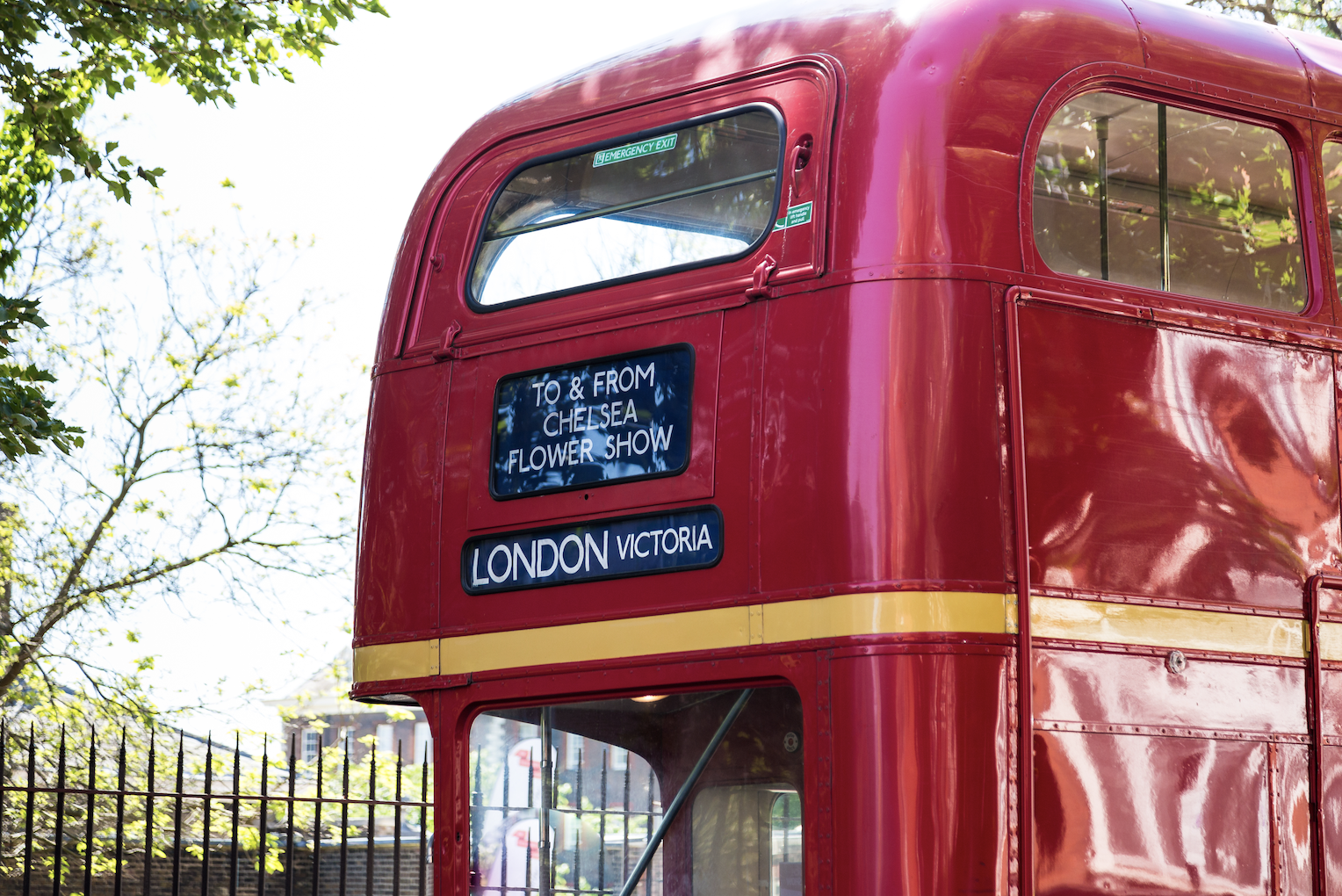
The Royal Horticultural Society Chelsea Flower Show is a highlight of Britain’s royal, society, and gardening calendar. Only 5 days long, usually in the third week of May, it draws the who’s who of the Royal Family, celebrities, and flower lovers from around the world.
Defined by its Show Gardens—full-scale, meticulously judged landscapes installed from scratch and dismantled days later, the Chelsea Flower Show is horticultural theater – and big business. Winning “Best in Show” can launch a designer globally. Inside the Great Pavilion, growers compete for medals with near-perfect specimens, and the “Plant of the Year” regularly introduces varieties that go on to dominate garden centres worldwide.
Simultaneously, Chelsea in Bloom transforms the streets of London’s Chelsea—especially Sloane Square and King’s Road—into a free, whimsical open-air floral art trail created by local boutiques, hotels, and restaurants.
Why go: To see the exact gardens, plants, and ideas that will shape how the world gardens next.
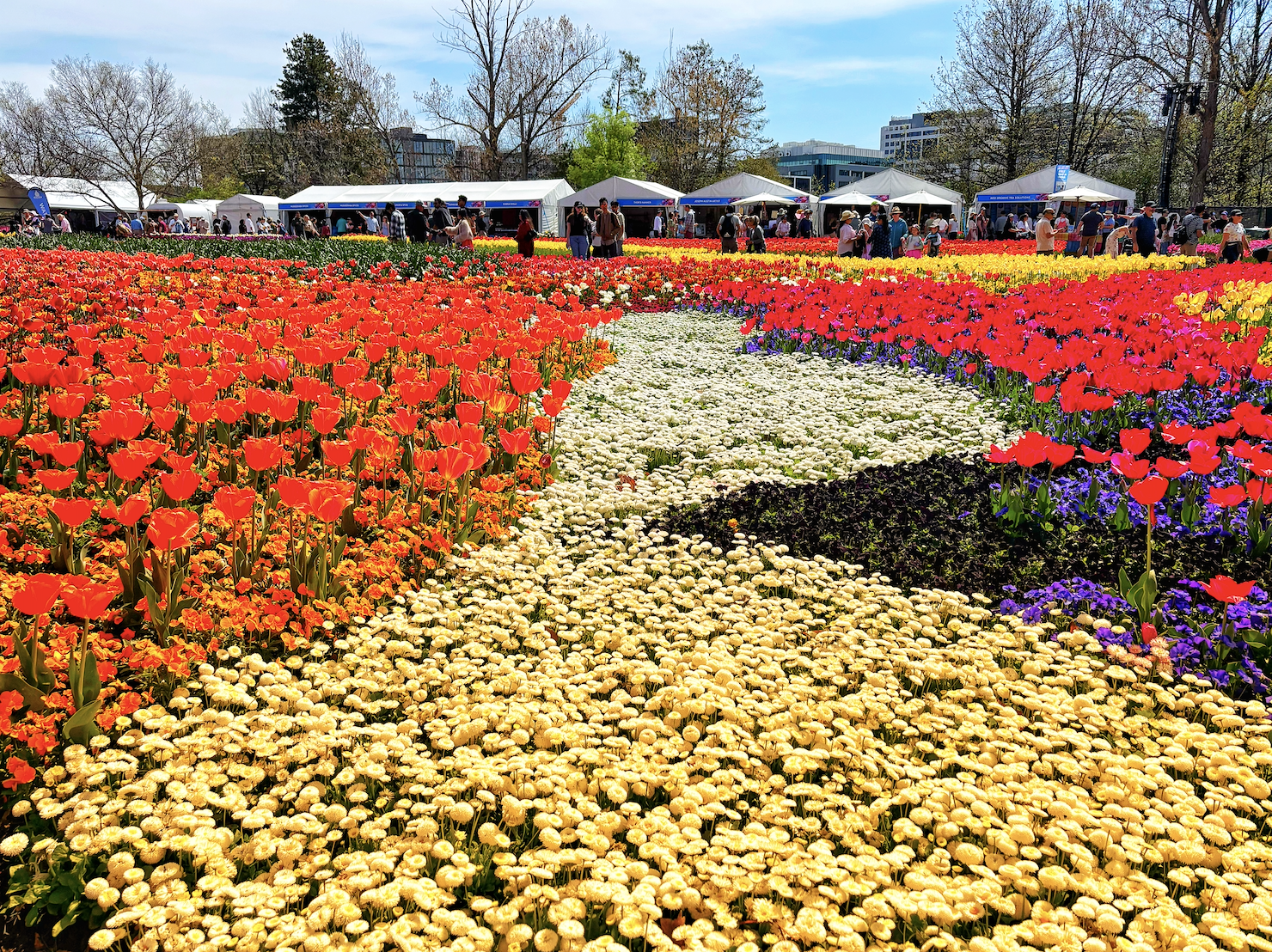
Spring Down Under is in September and October, and that’s when Aussie gardens shine. Floriade is known for its mass plantings arranged in bold, almost graphic patterns—entire beds of tulips and annuals laid out like landscape-scale design pieces around Lake Burley Griffin.
Each year follows a theme, and the planting schemes are executed with striking precision, more akin to outdoor installation art than traditional bedding displays. Its signature NightFest adds a second layer, with light projections and illuminated sculptures transforming the gardens after dark.
Why go: Monumental tulip displays by day—and a fully reimagined, light-driven experience at night.
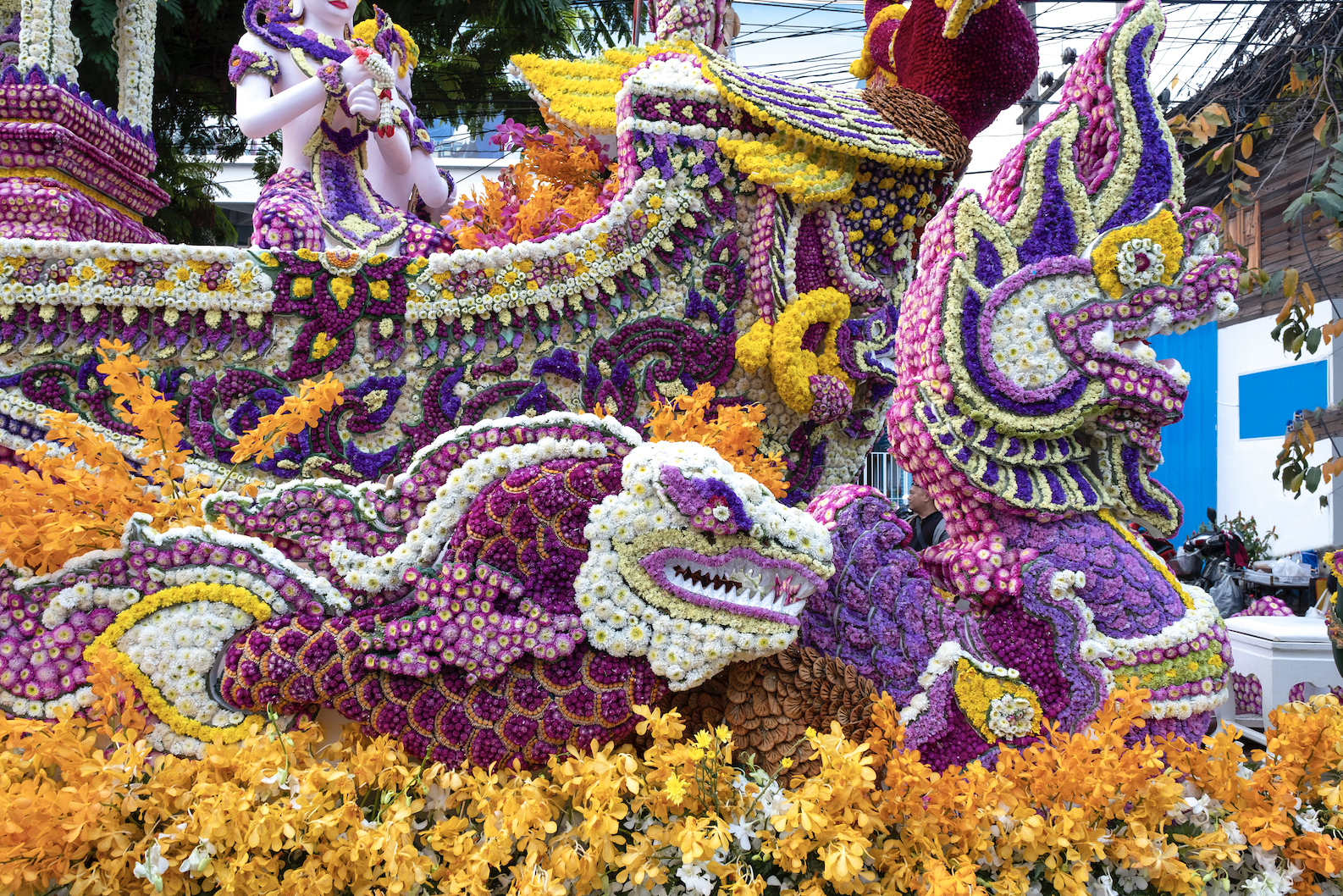
This northern Thailand festival, held for three short days in early February, is best known for its elaborate flower-float parade, where entire scenes—temples, animals, mythological figures—are constructed from orchids, marigolds, and chrysanthemums.
Chiang Mai is also a centre of orchid cultivation, and the displays highlight rare varieties alongside fields of locally grown damask roses used in regional perfumes and oils. Much of the action centres on Suan Buak Haad Park, where competitive displays and precision planting showcase the region’s horticultural expertise.
Why go: Intricately constructed floral floats and a rare window into Thailand’s orchid and rose-growing traditions.
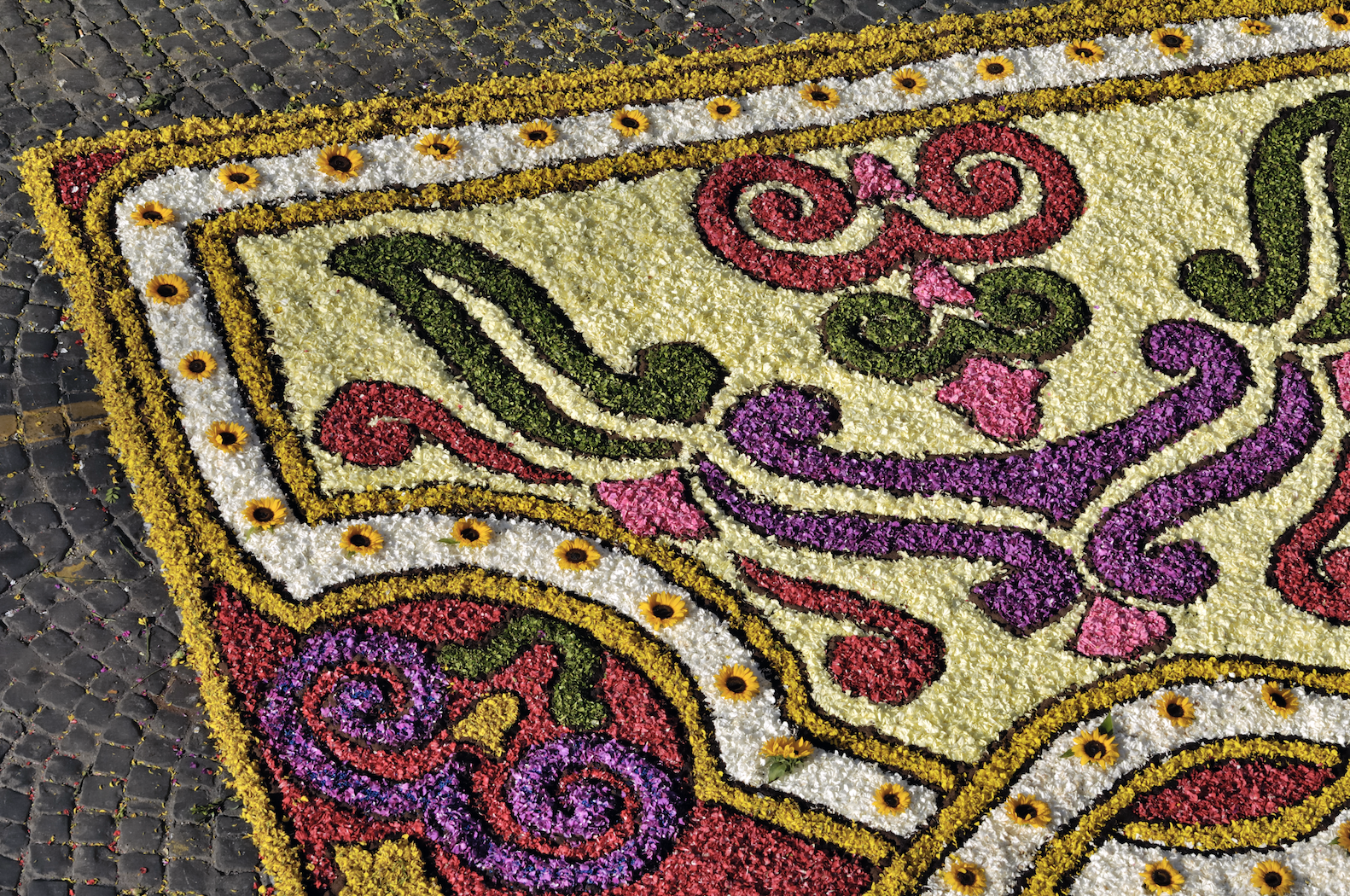
Genzano’s Infiorata, held over a weekend in mid-June, is defined by precision petal mosaics. Artists use thousands of hand-placed petals—sorted by colour and texture—to create highly detailed images that resemble paintings more than floral displays. The carpets run down a steep street in the historic centre, creating a dramatic, gallery-like perspective.
By Sunday afternoon, a traditional procession deliberately walks across the designs, dismantling them in minutes and highlighting the ephemeral nature of flowers and the natural world.
Why go: Hyper-detailed floral “paintings” you can walk through—before they’re intentionally erased.
Video and Story: Lynn Elmhirst, Cruise/ Travel Journalist and Expert
Images: Getty
All rights reserved. You are welcome to share this material from this page, but it may not be copied, re-published, broadcast, rewritten or redistributed.
by Lynn Elmhirst on 04/09/2026
Do you travel for the food? Festivals? Or maybe family? Over a quarter of travelers these days are interested in heritage or ancestry-based trips. The surge in DNA testing has been accompanied by a corresponding rise in the popularity of genealogy-focused trips.
People are putting their traveling ‘genes’ on. And not going sightseeing, but searching for their roots. Motivations vary from family heritage to the story of migration from their ancestral homes.
Do any of these ideas strike a chord in you and beckon you to your ancestors’ distant shores?
Do these destinations call you home? Here are some of the more popular destinations for North Americans to trace their roots.
Family heritage travel is genealogy, part emotional archaeology. But how much information do you need to ‘start digging?’
Some travelers arrive armed with binders of family trees and DNA results. Others simply know that “Grandpa was from somewhere near Kraków.”
Ancestry travel gives all the questions new meaning: Who? Where? When? Why? How?
Before you book a ticket, spend time with records — immigration documents, ship manifests, census forms, church registries. Sites like FamilySearch are invaluable, and many towns will respond to polite archive requests.
But remember: villages change. Borders shift. Records disappear.
Go looking for discovery — and be open to whatever you find, or don’t find.
If you’re zeroing in on a specific town, hire a local genealogist or guide. They know which municipal office holds the birth records and who still remembers the families who left.
In small places, people — not paperwork — may be your best resource.
Don’t turn your trip into a full-time research project.
Yes, visit the ancestral village. But also experience the destination. If your roots are in southern Italy, explore Puglia. If they trace to Portugal, spend time in Porto to understand the country's rhythm. Today’s lifestyle is as valuable a lesson in your heritage as your history.
Walk into bakeries. Visit parish offices. Ask about your surname.
Bring documents. Smile. Be curious. And friendly.
A shared name can open doors you didn’t even know existed.
Sometimes you’ll find long-lost cousins. Sometimes you’ll find a locked archive and a shrug.
No matter what you discover, if you travel with an open mind and open heart, you’ll always come away richer than when you left.
Image: Getty
All rights reserved. You are welcome to share this material from this page, but it may not be copied, re-published, broadcast, rewritten or redistributed.
by Lynn Elmhirst on 04/09/2026
Recently in Sweden, I experienced ancient wellness practices intertwined with new science and artistic sensibilities. In many ways, Sweden wrote the book on wellness as a way of life and a travel destination. And my stays at two sister hotels in Stockholm proved the country is in the vanguard of redefining wellness travel again.
In case you missed it, in 2025, Sweden became the first country where doctors can prescribe travel for wellness. The global leader in quality of life, renowned for its thousands-year-old sauna culture, is an inspiration for wellness lifestyle – and a beacon for wellness travelers… and now this:
In a wellness ‘first,’ Sweden has become the first country where patients can download a medical referral form to take to their physician for wellness travel to the country!
The Swedish Prescription isn’t a marketing gimmick. The program is rooted in deeply-held Swedish beliefs and practices, like
all of which combine to create meaningful and scientifically supported health benefits.
All that said, why would anyone go to Sweden in the winter, far enough north that the sun rises after 8 am and sets mid-afternoon?
I went to spend a week immersed in the wellness experiences at 2 of Stockholm's Nobis Hospitality Group hotels: Hagastrand and Hotel J.
The company has set a new gold standard for wellness travel, following a three-year renovation program, masterminded by Alla Sokolova, its Head of Wellness.
“I think every human being has an innate wish to be in their best form,” she explained to me. Her vision for the wellness program at the hotels is for a stay there to be part of a “never-ending learning journey” to help create winning conditions for guests to achieve their maximum performance, their best selves.
When it re-opened in Fall, 2025 as part of Marriott’s Autograph Collection, Hagastrand Spa and Hotel was already billing itself as a “new social wellness destination” in Sweden’s capital. A post-modern building attached to a historic military barracks in the quiet, seaside location of Stockholm’s Royal Park, Hagastrand re-launched with a 27,000 square foot, cutting-edge wellness center with some practices that are the first of their kind.
If you’re imagining a clinical, white-jacketed, James Bond-style European health retreat, think again. Instead, Hagastrand offers warmth, along with a masterful and welcoming blend of ancient practices and advanced therapies, including modern technologies that deliver wellness experiences to guests in one-of-a-kind ways, all under one roof.
There’s also a focus on music, “a universal language” that “everyone can relate to,” Alla adds.
“Tuning our bodies and our minds,” as she puts it.
Hagastrand’s facilities incorporate both traditional Nordic and international wellness practices, as well as sensory design and the newer concept of ‘biohacking.’
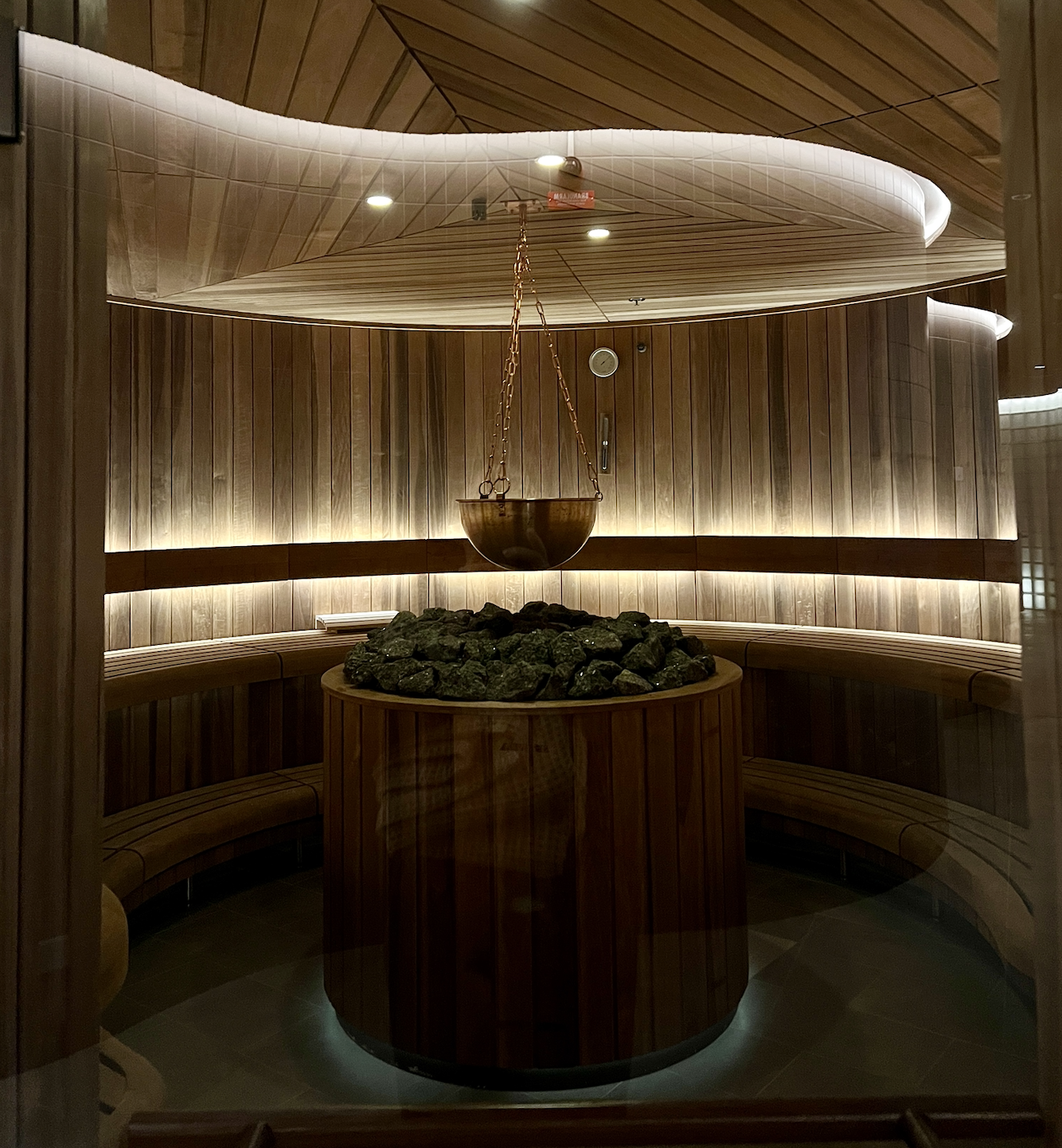
Along with treatment rooms and private suites you expect to find in a spa or wellness center, Hagastrand’s includes:
A Thermal center, with multiple saunas, including herbal and hammam, and also:
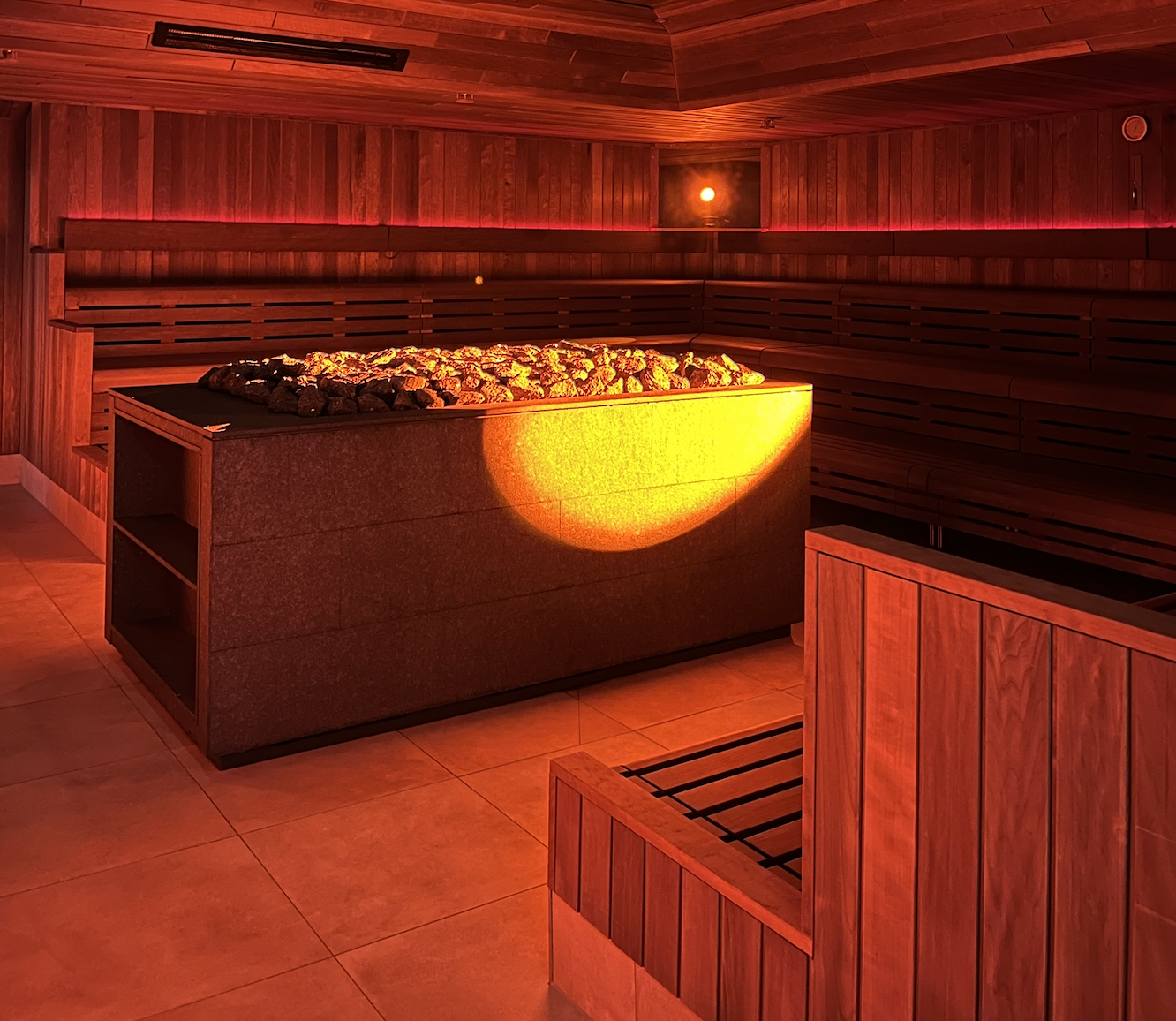
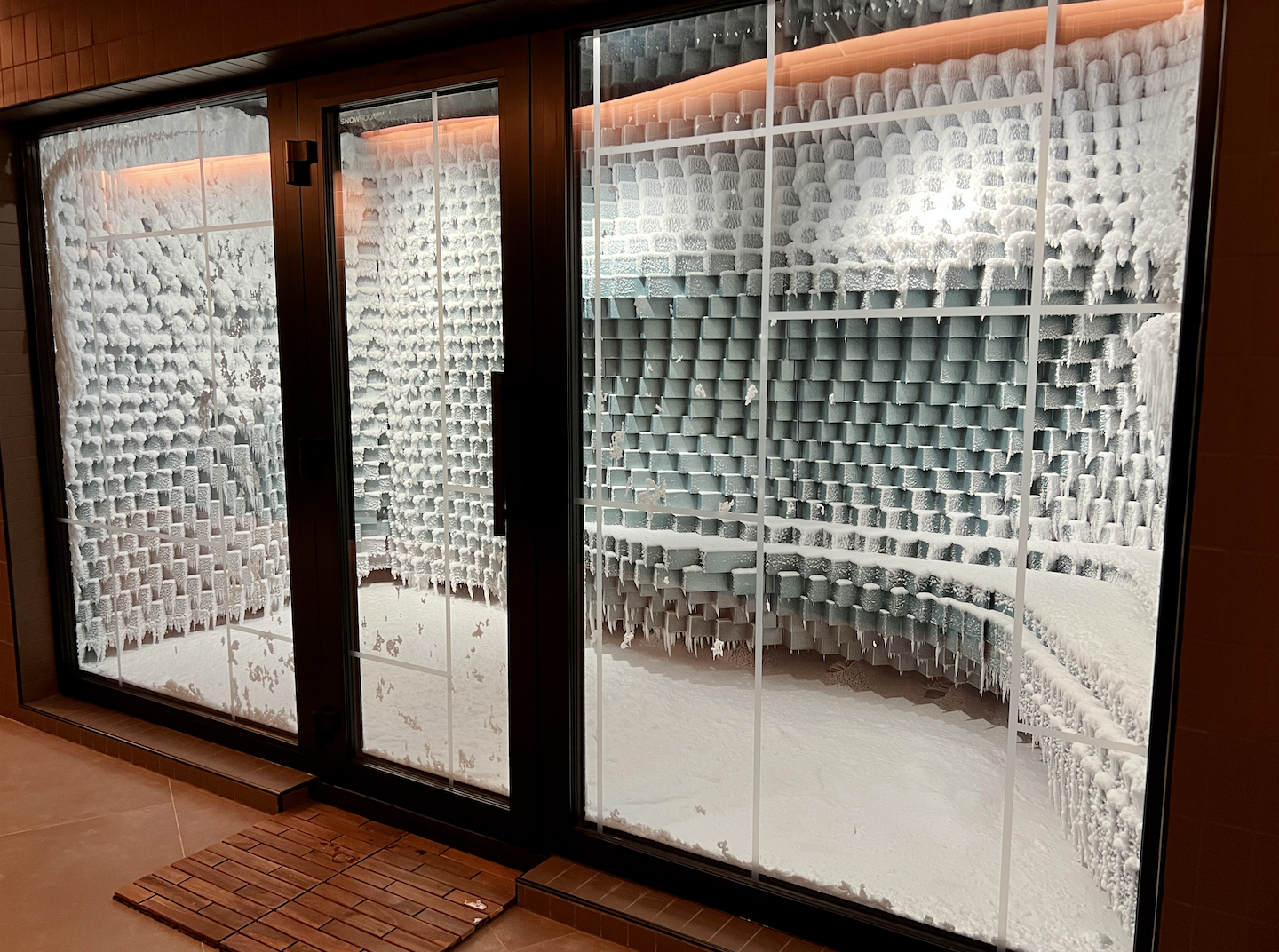
Gongs, handmade in Italy, including a giant (as tall as a person) gong at the end of the pool played by hand by sauna masters, and
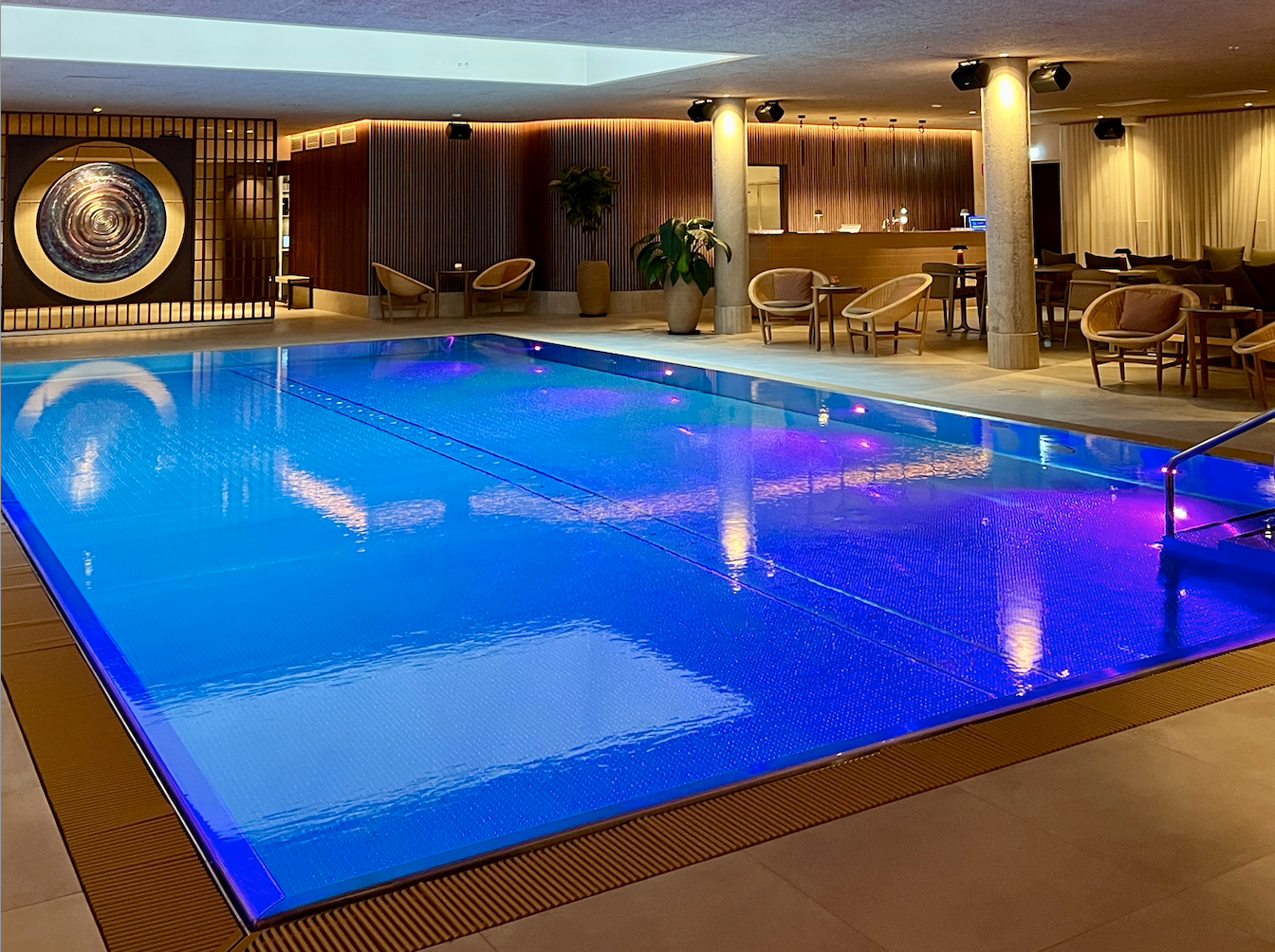
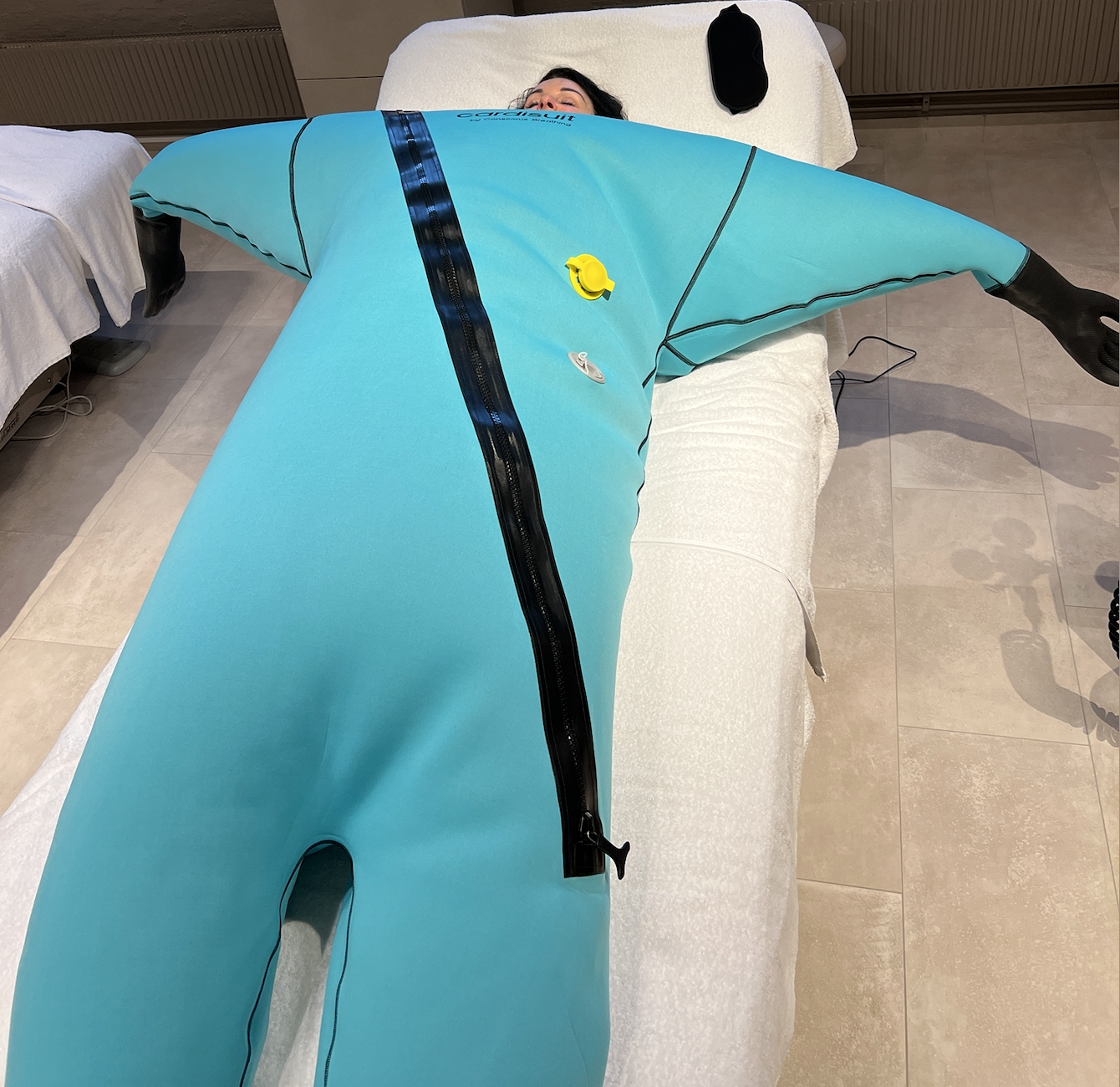
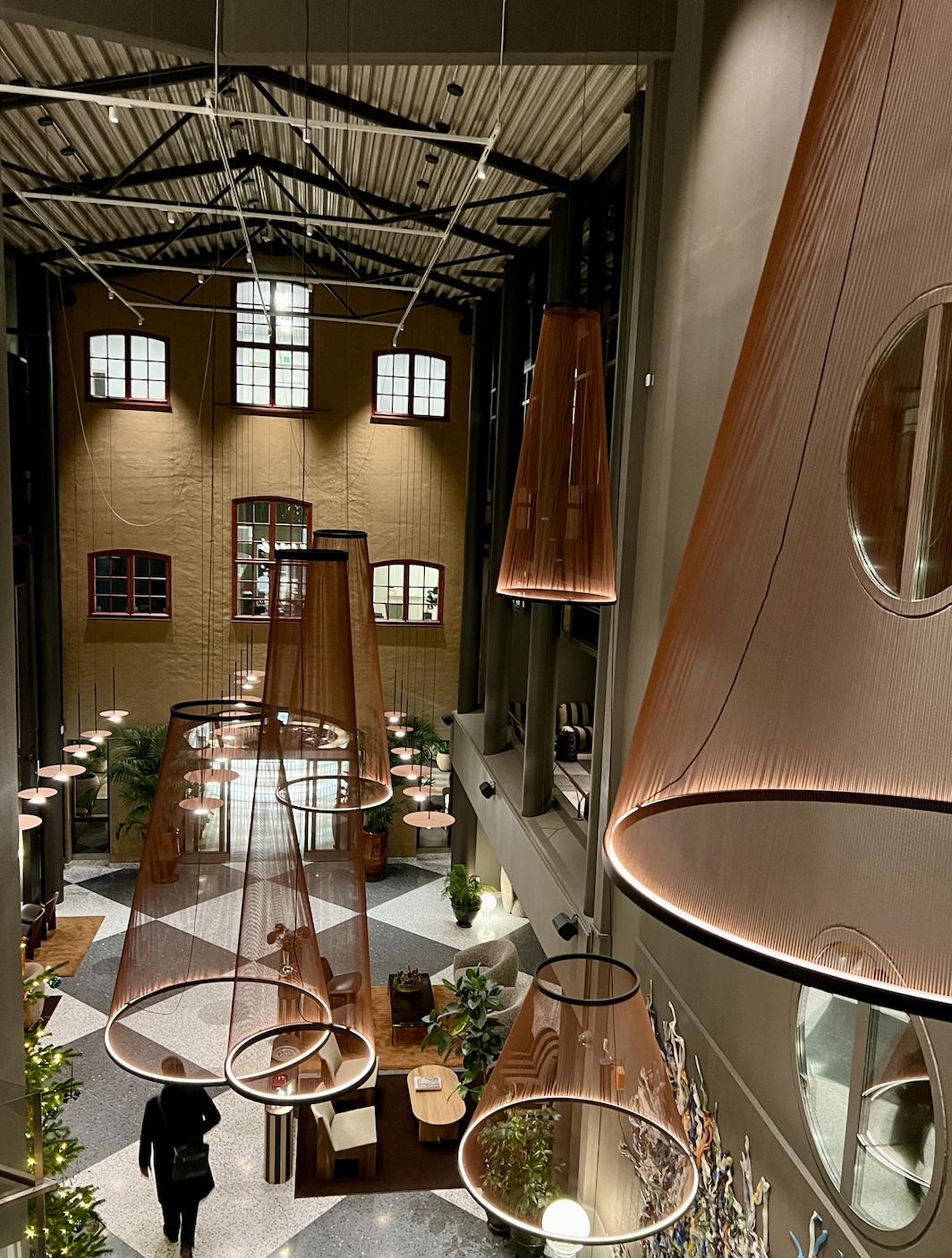
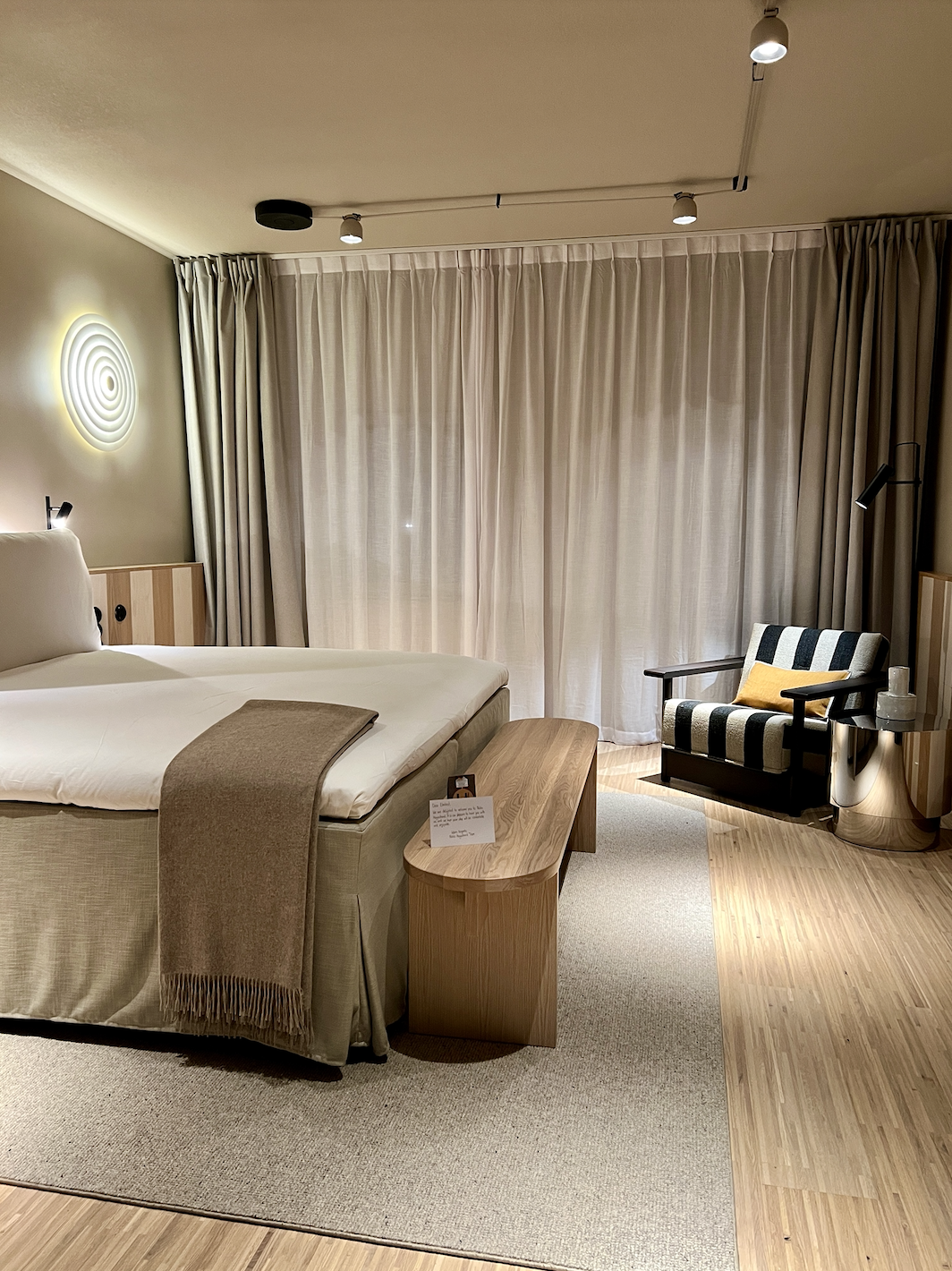
The state-of-the-art wellness experiences flow harmoniously with the new versions of familiar practices and are woven seamlessly into a hotel stay that includes warmly Nordic accommodations, stylish bars, and a fine dining restaurant (no restricted, seaweed smoothie diet here unless you wish!) that even drew a member of the Swedish Royal Family while we were dining one evening.
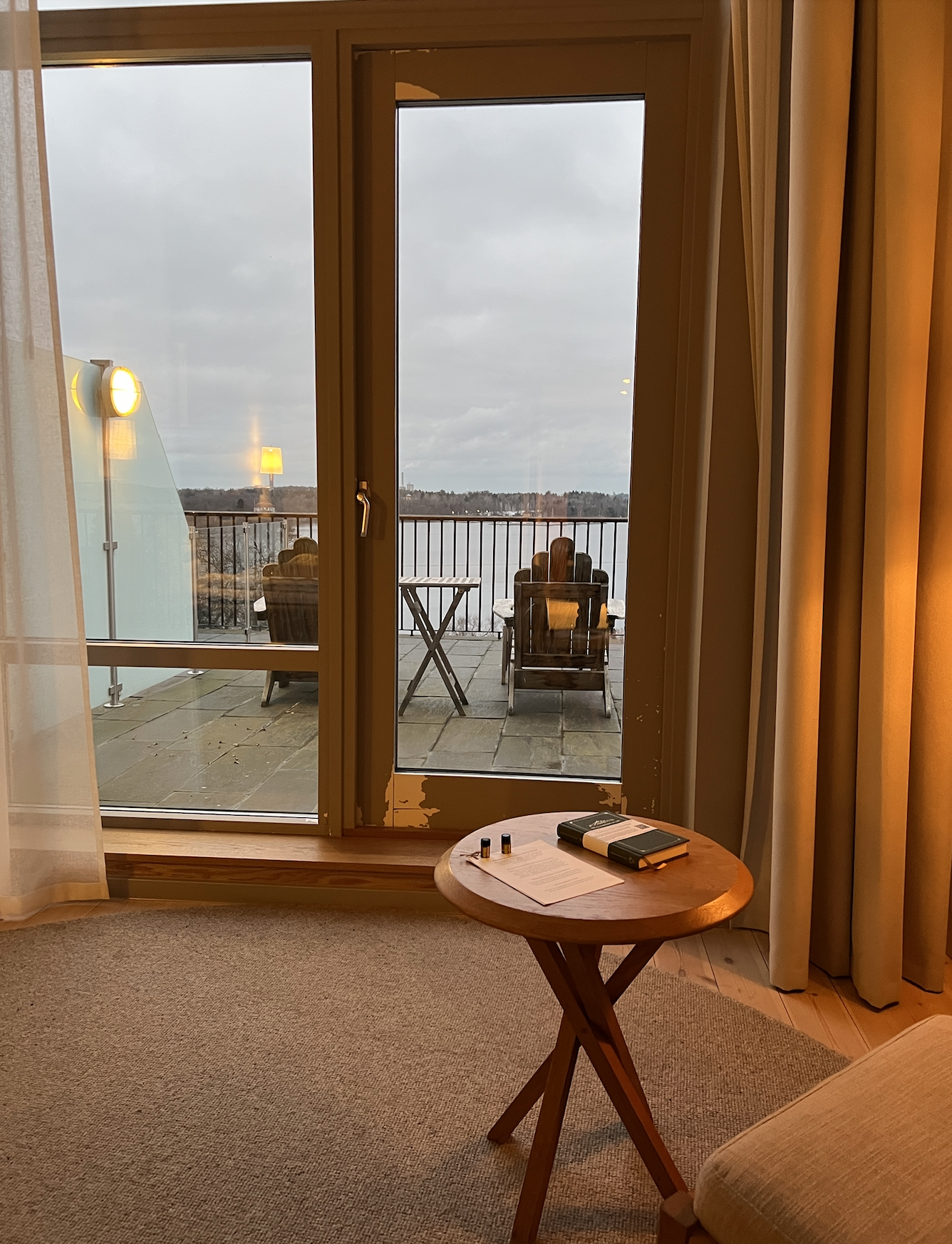
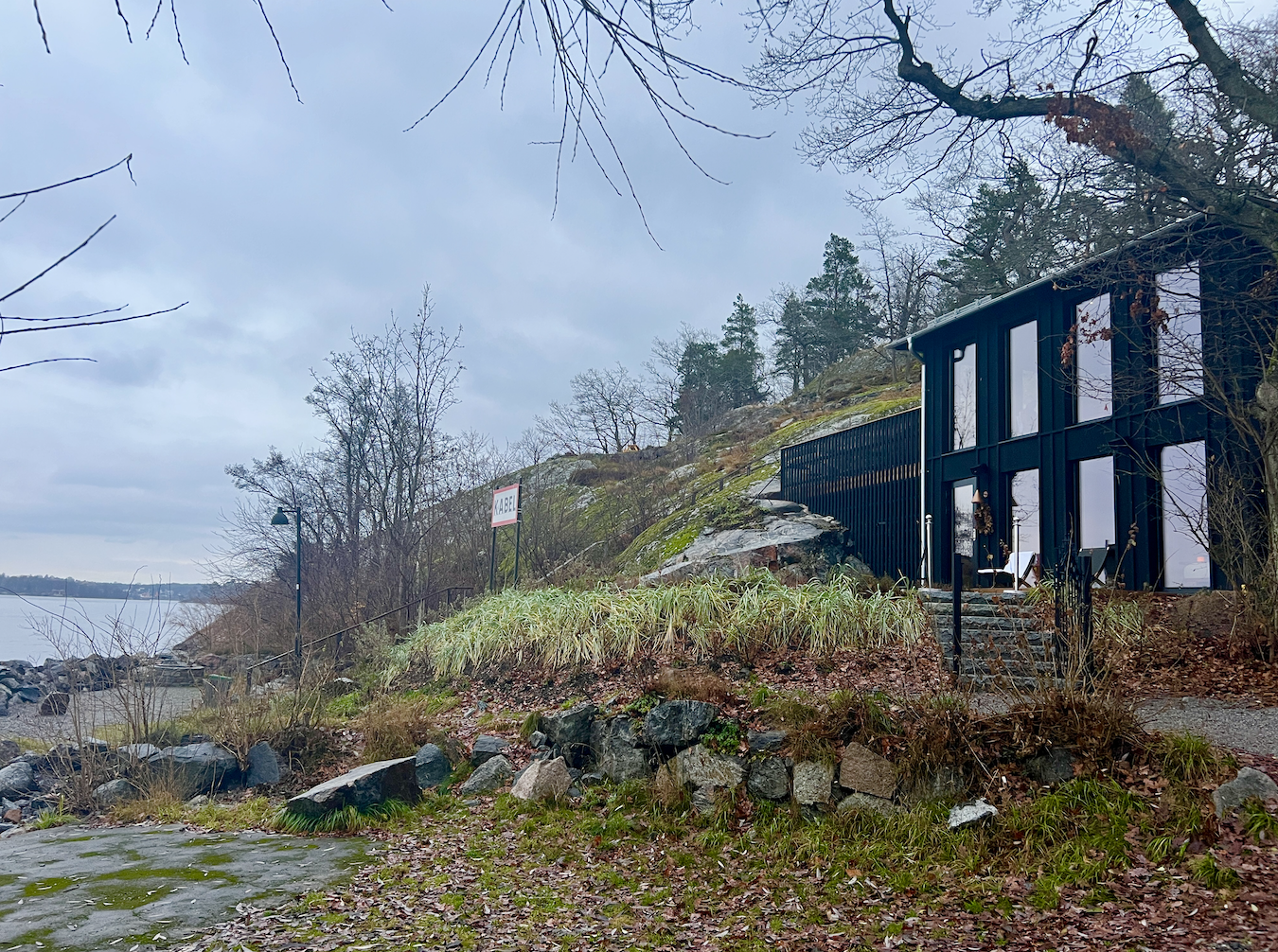
Sister property Hotel J draws inspiration from its location on the Stockholm archipelago in a Newport, Rhode Island-type neighborhood of illustrious and historic seaside homes.
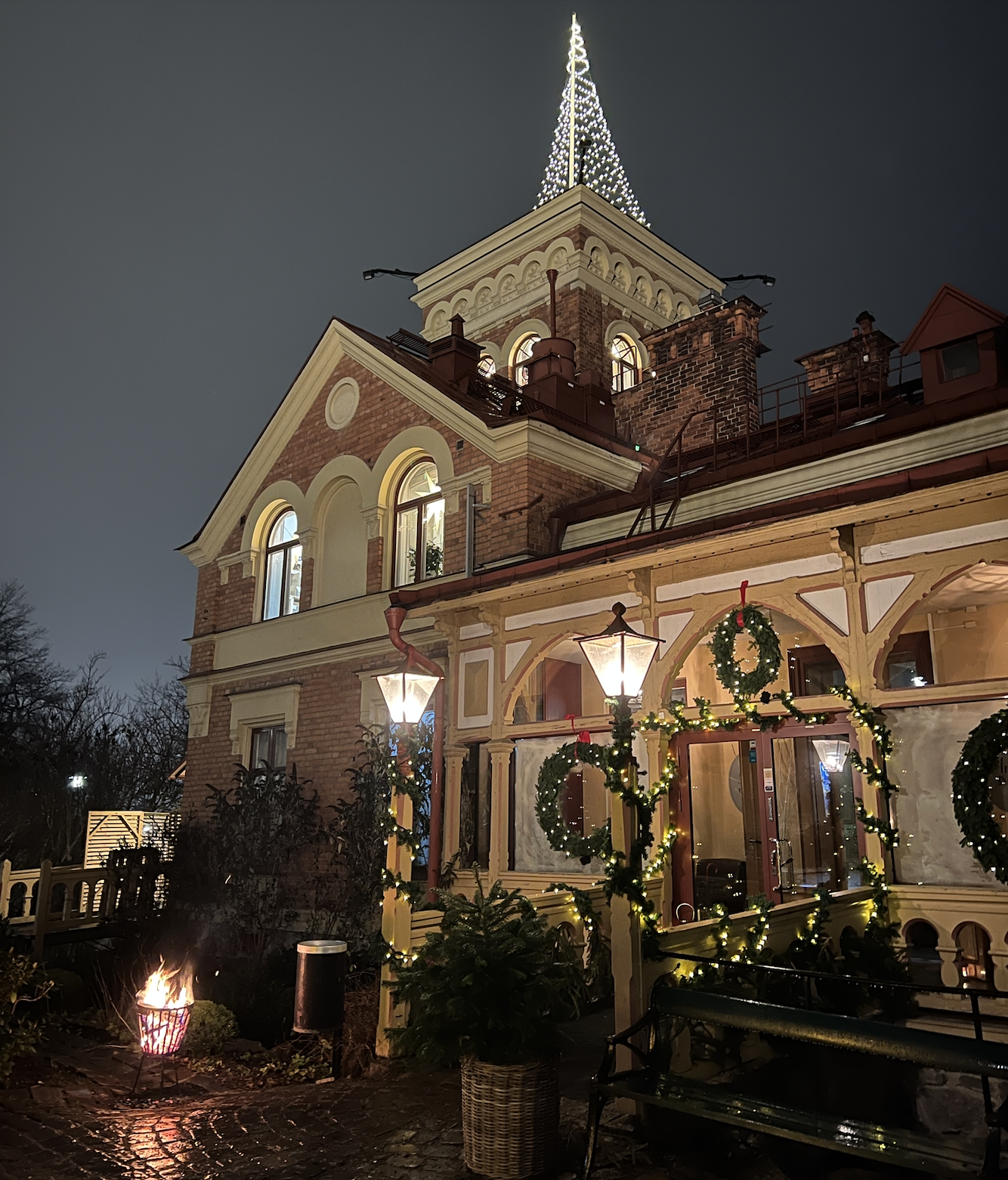
The nautical and natural themes run deep, from stunning water views and terraces overlooking the sea, extensive gardens that are not just visual but also harvested for wellness herbs and botanicals, and, of course, its wellness offering.
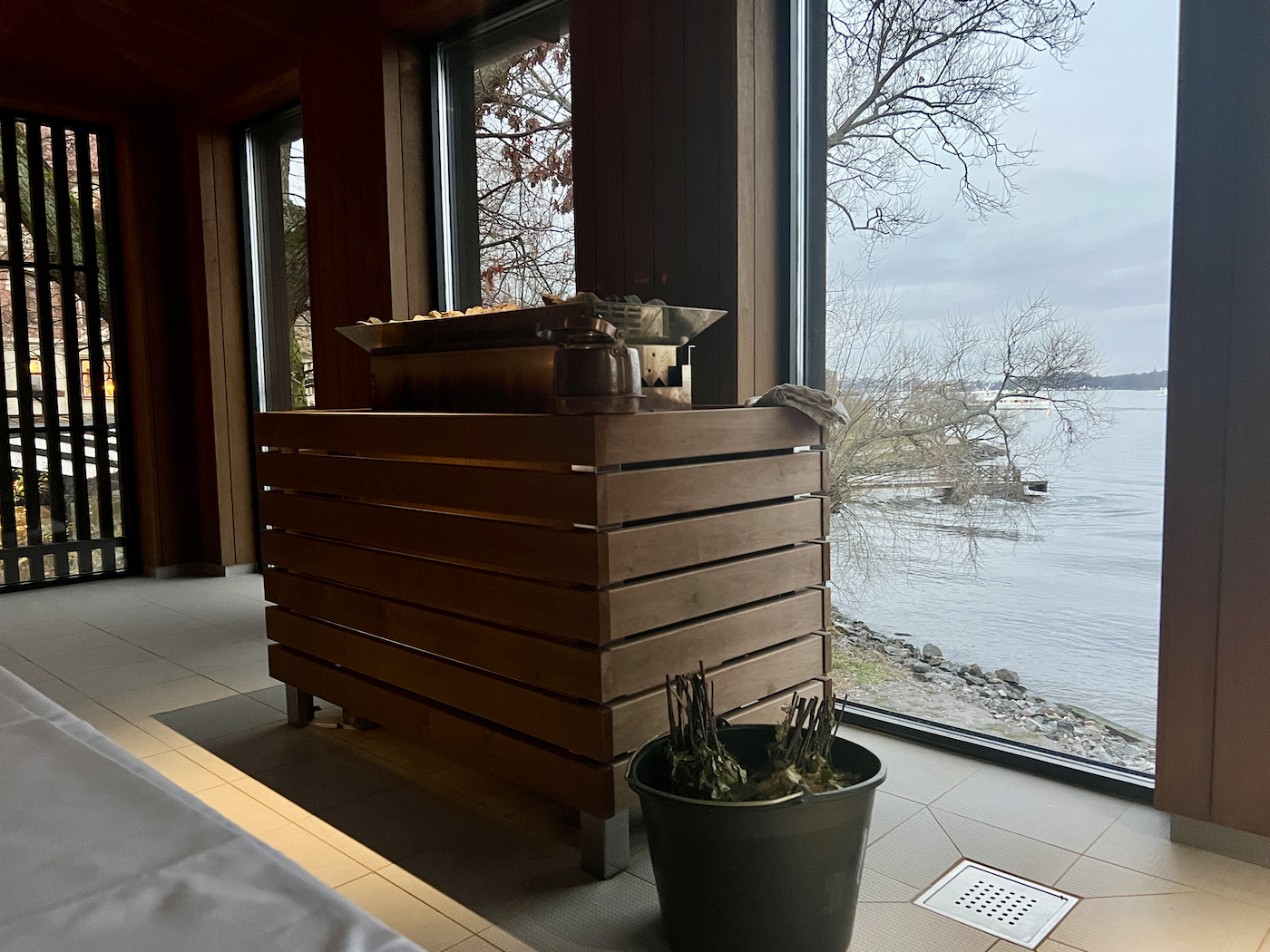
Hotel J’s Sauna by the Sea is a ritual all the more memorable for its location in the Panorama Sauna perched on rocks rising from the waves. The sauna itself is on the second story, with floor-to-ceiling windows providing the perfect vantage point over the sea to become part of your herbal-infused sauna ritual. And a cold plunge into a wintery sea is just steps out the door to conclude your authentic Swedish sauna!
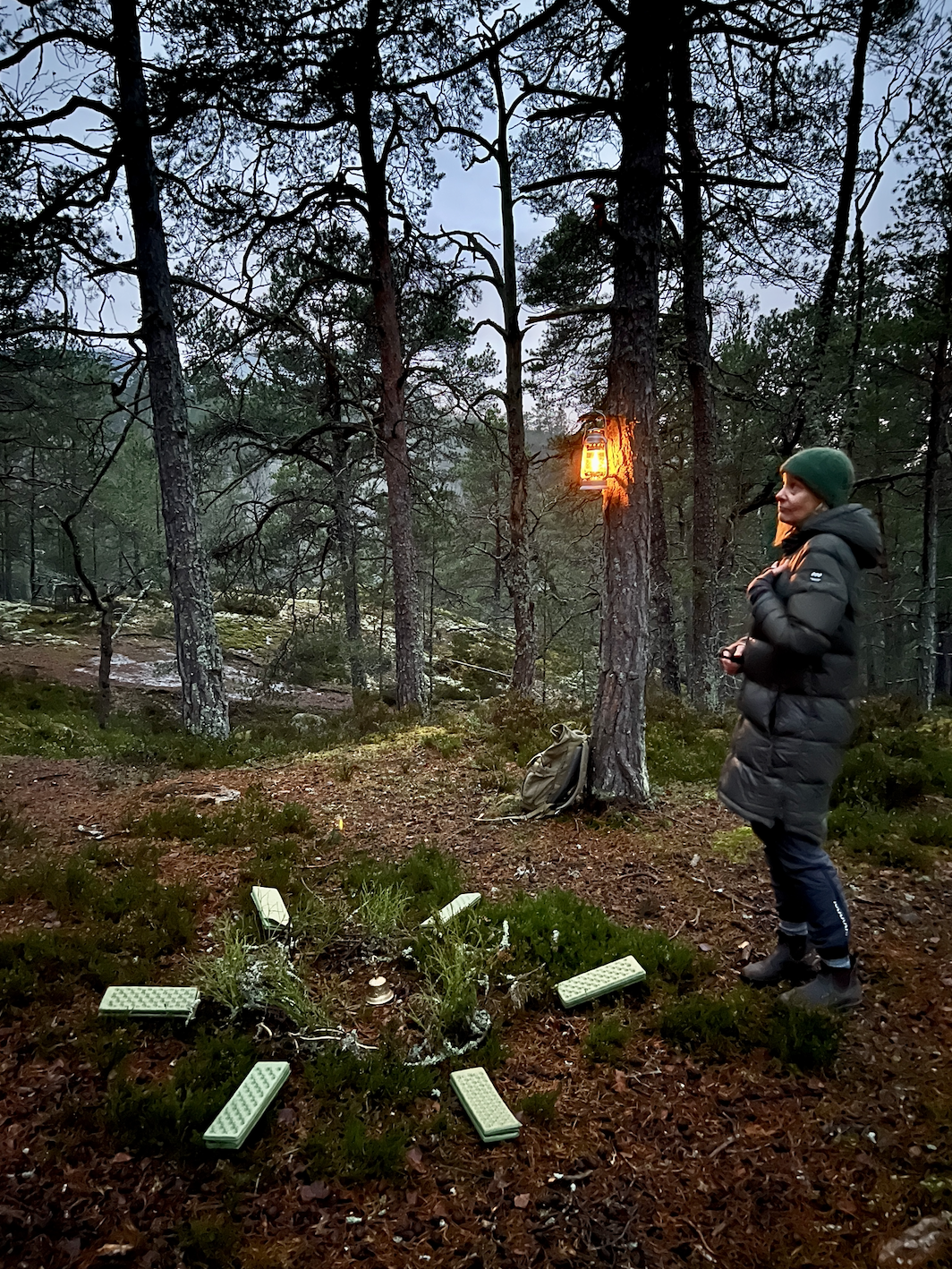
But we also got off property, accompanied by ‘nature therapist’ Lisen Sundgren, who took us on a Swedish interpretation of that famous Japanese wellness practice, ‘forest bathing.’ During a walk in a nature reserve next door in the twilight, where dimming sight helped sharpen our other senses as we were guided to literally feel, hear, and smell the woods. We ended up on a rocky lookout over the sea and the lights of Stockholm on the opposite side of the archipelago, sipping her homemade Swedish rosehip soup and communing by the mystical twinkles of lamp light.
From the primal forest… to a wellness rave!
In another ‘first,’ Hagastrand and Hotel J’s parent company has introduced ‘Sanctum’ to the Nordics as part of its wellness experience offering. We were invited to the launch party at the Nobis Hospitality Group’s event space at the Stockholm Opera House.
Sanctum hosts these ‘wellness raves’ around the world for a growing community drawn to the euphoric release of its hour-long, high-intensity, music-led 55-minute sessions that combine HIIT, Kundalini yoga, breathwork, and meditation. Ours in Stockholm was candle-lit in the awe-inspiring historic surroundings… in complete silence, with sound healing, music, and guidance delivered through headphones.
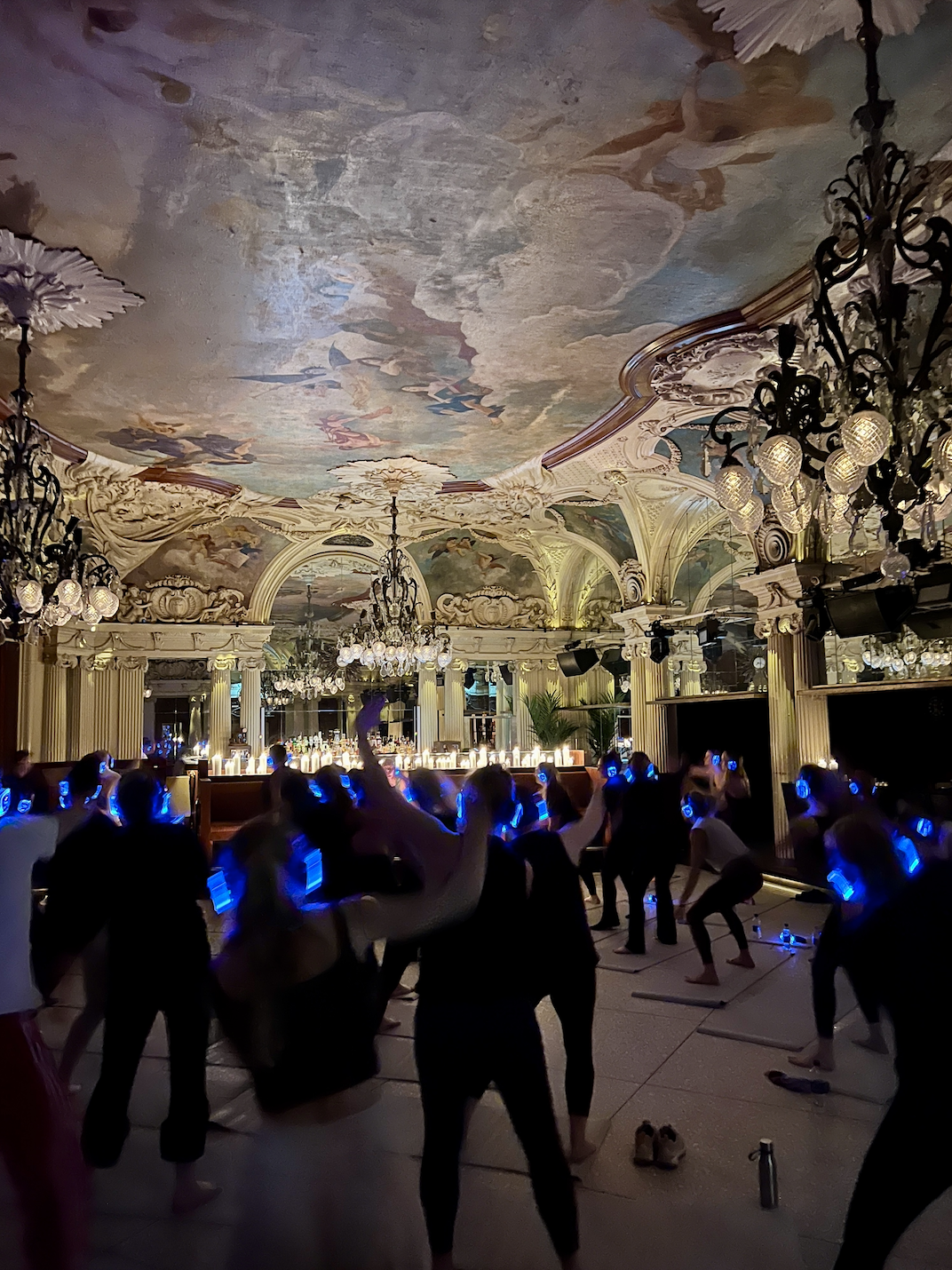
***
Embracing the widest interpretations of wellness lived through ancient traditions, Nature, technology, art, and the most welcoming Scandinavian culture and lifestyle… these Swedish hotels are setting the stage for a new global approach to wellness travel.
The Nobis Hospitality Group’s founder gives all the credit for the hotels’ pioneering wellness journeys to Head of Wellness Alla Sokolova – a risk, but a calculated one, with a simple foundation of beauty and hospitality.
“Everybody today is talking about longevity and all these things, and sometimes it's too much,” Alessandro Catenacci, owner and CEO of the family-owned Nobis Hospitality Group, told me.
“I hate the word ‘trend.’”
He acknowledges that the groundbreaking wellness offerings of the two hotels are “a new thing for us,” but “things are not so complicated usually if you do it in the right way.” He points out that wellness practices are a natural way of life for Swedes.
“We are a sauna family.
“And this is very important because you, you can't go on doing things if you don't like that. I love it, really.”
Hagastrand and Hotel J may be on the leading edge. But advanced wellness experiences for travel are no longer a novel trend.
As more travelers intentionally incorporate their wellness practices from home into their travels to new destinations, and expand their wellness horizons while traveling, wellness hospitality will take the lead from Hagastrand and Hotel J in helping us discover the destinations’ best experiences to hone our mental, physical, and spiritual health.
Images and story by: Lynn Elmhirst, travel journalist and expert
All rights reserved. You are welcome to share this material from this page, but it may not be copied, re-published, broadcast, rewritten, or redistributed.
by Lynn Elmhirst on 03/26/2026
The hotly anticipated new river cruise line has shared how it’s planning to offer its guests a new way to experience the river communities of Europe when it debuts in 2027. Four curated categories of exclusive and included shore excursions reveal how guests will river cruise, Celebrity-style.
Local insiders lead the Storyteller Series and Skillmaster Series, while the Keys to the City Series gives guests the tech-driven power to explore on their own with insights curated to their own interests and passions. Available once per sailing, the Celebrity Takeover Series delivers one-of-a-kind, bespoke experiences.
The shore excursions are available across all 2027 and 2028 Celebrity River Cruises itineraries, and pre- and post-cruise stays in Prague, Budapest, and Amsterdam.
Celebrity River Cruises' Storyteller Series offers experiences guided by residents, artists, and cultural insiders who call each destination home. Guests can choose from multiple included experiences at each port, each balancing iconic landmarks with hosts’ personal favorites and hidden stories only locals know. Here are a couple of examples:
Amsterdam
A canal captain will share Amsterdam's centuries-long relationship with water, showing guests an unseen side of the city’s iconic waterways. Guests will cruise hidden passages, through the eyes of someone with deep family ties to the region, as they admire the city’s oldest building, Oude Kerk, board a legendary Dutch trading ship, and learn about modern canal engineering.
Prague
Guests who enjoy discovering a city through food and drink will be led through the city’s rich brewing traditions by a local brewer. From the brewer’s unique perspective, guests will explore historic breweries like the bustling U Vejvodu Tavern, as well as beer-infused artisanal shops. Taking a journey that blends history and hospitality into every pour, the brewer will show guests how centuries-old recipes shaped the city’s culture of connection and celebration.

Guests craft, cook, and create alongside the artisans and makers who shape each destination's cultural identity in shore excursions like these:
Budapest
A local Mamika (grandmother) will lead aspiring culinarians through generations-old Hungarian recipes from her own home kitchen. After selecting ingredients at the local Central Market Hall, guests will uncover dishes that bring Budapest’s soul to the table through Mamika’s treasured family recipes and cooking secrets.
Amsterdam
A local artist leads a painting class that immerses guests in Van Gogh's imagination. After exploring the famed painter’s works at the iconic Van Gogh Museum, guests will discover the settings that influenced some of his greatest pieces while learning some of the techniques he used to turn emotion into color and movement into meaning.
Through an innovative digital platform, guests access curated route maps tailored to specific interests such as art, history, food, and architecture.
Interactive maps, audio guides, and video content lead guests off the beaten tourist path to interest-led locations, where stationed local hosts provide behind-the-scenes access and exclusive experiences at working studios and craft sites, creating moments of surprise and delight. For example:
Bratislava
Architecture enthusiasts will follow their curiosity to St. Martin’s Cathedral, hearing from a local historian who brings its coronation past to life, before hiking to Bratislava Castle to see how the fortress has watched centuries of change, then pausing beneath the modern span of the UFO Bridge with an architect who explains its bold vision.
OR
Uncover the city’s authentic Slovak flavors from raising a glass in a traditional Slovak pub while a generational brewer pours his stories into every craft drop, to tasting delicate sweets in a family-run pastry shop where the baker shares recipes passed down through decades. Guests will curate their adventure, shaping their own path to uncover the stories of cities exactly as they choose.
Once per sailing, these exclusive, bespoke experiences transform must-see European attractions and unassuming plazas into elevated private events available only to Celebrity River Cruises guests. Celebrity says these are “indulgent bucket-list experiences” designed to be the defining memory of your river cruise
Celebrity River Cruises guests can extend their journey with multi-day pre- and post-cruise stays that carry the same locally-led, small-group discovery philosophy as every sailing.
Available in Prague and Budapest beginning in 2027, and also Amsterdam in 2028, each stay includes daily small-group tours with local hosts, premium hotel accommodations, dedicated concierge service for dining reservations and private experiences, daily breakfast, and airport transfers.
The result is a seamless, end-to-end journey from arrival to departure with no gap between the onboard Celebrity River Cruises experience and the destination discovery that defines it.
Bookings for 2027 and 2028 pre- and post-cruise stays in Summer 2026 open, and all other destination experiences will open for booking in 2027. Celebrity River Cruises sailings are on sale now.
Images: Celebrity River Cruises
All rights reserved. You are welcome to share this material from this page, but it may not be copied, re-published, broadcast, rewritten or redistributed.
by Lynn Elmhirst on 03/26/2026
You likely already know that’s a trick question. This tiny dot in the eastern South Pacific Ocean, but technically a territory of Chile, is actually properly called Rapa Nui.
The world over, Easter Island has been synonymous with exotic mysteries of an impossibly distant, long-lost civilization and mind-boggling human endeavor.
It may be the most remote inhabited island on the planet. Only a few thousand people live on this remnant of oceanic volcanoes sticking out of the sea, and that's the first miracle itself. The closest inhabited island is 1300 miles away (Pitcairn Island with only 50 people), and the nearest continental point is Chile, over 2000 miles away. Local tales say a 2-canoe Polynesian expedition around AD 700 was the start of Rapa Nui's extraordinary story.
Today, Easter Island is on the map as one of the corners of the millions of square miles of the Pacific Ocean known as Polynesia – the other corners for easy reference are Hawai’I and New Zealand. And it’s on the map of global travelers who want to come face to face with the island's nearly 1000 moai at its UNESCO World Heritage Site.
These stately, solemn statues were carved during a 500-year period in the island's history, beginning a thousand years ago. The moai share artistic characteristics with Polynesian carvings, confirming the origin tale of the Rapa Nui people. Chiseled with only stone tools out of volcanic rock in the 'quarry' of an extinct volcano, each statue took a team of half a dozen artisans about a year to complete. The largest is over 30 feet long and weighs 90 tons. They were an incredible feat of creativity, production, and organization.
You probably think of them as 'Easter Island heads'. But the moai actually have torsos, and some even have complete lower bodies; they were just buried up to their necks over the centuries by shifting sands.
These monumental statues represented deceased ancestors. And only about a quarter were originally installed; others were left in the quarry or remained en route to their intended locations. All but 7 faced inland, the spirits of the deceased 'watching over' the living and their lands. The 7 facing the sea stood as wayfinders for seafarers.
Many moai were toppled after the mysterious collapse of the Rapa Nui society in the 19th century. In recent decades, local and international efforts have restored and re-mounted a number of moai. This dot on a map in Chilean Polynesia still seems as awe-inspiring and as full of hidden secrets as when explorers first arrived.
Which brings us to: Why is it called Easter Island? The Dutch explorer who was the island's first-recorded European visitor arrived on Easter Sunday in 1722 – he came upon it while searching for another island. (He must have been pretty lost!) So 'Easter Island' it was dubbed, and its current official Spanish name in Chile is still Isla de Pascua, while its Polynesian name is Rapa Nui, in the local language: the 'naval of the world'.
There's more to Rapa Nui than the silent witness of the moai to the island's past. Visitors experience the local version of Polynesian culture, explore pink-sand beaches, caverns, and dive sites, cycle, hike, or ride horses across prairies and volcanic hillsides, and even surf on those waves so distant from other shores.
How to get there? You can fly from both Chile and Tahiti, participate in tour packages offered by expedition and exotic travel experts, arrive by small or expedition cruise ship, or by private yacht.
There may be nowhere else in the world where a traveler can feel the greatness of human achievement and small in the face of a culture so far across the waves.
By: Lynn Elmhirst, travel journalist and expert.
Images: Getty
All rights reserved. You are welcome to share this material from this page, but it may not be copied, re-published, broadcast, rewritten, or redistributed.
by Lynn Elmhirst on 03/26/2026
World travel is easier than ever. But it seems world geography is not! Some destinations remain stubbornly — and even hilariously — confused by travelers, media, and even governments. The result is a mix of comedy, branding opportunity, and unsuspecting travelers finding themselves in the wrong place.
In some cases, people simply don’t know the difference, and it’s a case of mistaken identity and some embarrassing social media posts. Others are tiny spelling errors that have landed travelers on the opposite side of the world from where they expected to be. There are cities, countries, and regions that regularly get confused.
Admit it: even an intelligent and savvy traveler like you gets some of these destinations mixed up!
So what better time than April Fools to run through the hit parade of trickster travel destinations?
Australia and Austria are as different as two countries can be. And in different hemispheres!
Australia is a young, vast, sun-drenched country defined by distance—beaches, reef systems, and cities like Sydney that feel plugged into the Pacific. It’s long-haul, laid-back, and larger-than-life.
Old World Austria is compact, landlocked, and classically European—Alpine peaks, imperial history, and cultural heavyweights like Vienna and Salzburg.
Yet their confusion is so persistent that Austria’s tourism board leaned into it with the now-famous line: “No Kangaroos in Austria!”
This is possibly the most politely awkward confusion in global travel.
So common, in fact, that Visit Sweden launched an entire campaign to address it—complete with a straight-faced “negotiation” video proposing a formal division of national identities.
The messaging is brilliantly deadpan:
Switzerland has banks; Sweden has sandbanks
Switzerland has yodelling; Sweden has a silent nature
The Swiss keep the watches; the Swedes offer the luxury of forgetting about time
It’s funny because it’s true. The confusion shows up in headlines, speeches, and travel plans more often than any half-experienced traveler would like to admit.
“Tomayto”, “Tomahto.” Grenayda, Granahda. Two destinations thousands of miles apart, and cultural worlds apart.
Grenada is a Caribbean island nation where there’s nutmeg in the air, rainforest spilling into the sea, and long, languid afternoons on Grand Anse. It’s called the “Spice Island” for a reason.
Granada, on the other hand, is a city in Spain: Moorish palaces, tapas culture, and the architectural marvel of the Alhambra rising above the city like a mirage.
One is barefoot, the other is baroque.
This is less a mix-up and more a recurring travel identity crisis. They’re both countries, and both in the Caribbean. But that’s where the similarity ends.
Dominica (dom-in-EE-ka) is volcanic, rainforest-thick, and defiantly underdeveloped. You go here to hike, to soak in hot springs, to earn your cocktail off the beaten track. You have to work a little harder to vacation in Dominica. You won’t find direct flights from North America. Instead, you connect on Island Hopper Airlines through regional hubs like Barbados, San Juan, and St. Lucia.
The Dominican Republic is a hub. It’s one of the Caribbean’s largest countries and most popular beach resort destinations —built for sun-seeking travelers, with resort areas like Puerto Plata and Punta Cana, and a rich colonial history in Santo Domingo. All-inclusive resorts line the country’s beaches, and airlines and packaged tour operators serve the country well.
Here’s a quick test: can you place these two Central European countries on a map?
Slovakia and Slovenia don’t just sound similar—they both fly under the radar of popular European travel destinations, so they’ve gotten used to handling the non-stop cases of mistaken identity.
Embassies have long reported receiving each other’s diplomatic pouches. Invitations to official events have arrived in the wrong capital. Trade documents, cultural exchanges, even the occasional VIP correspondence—misaddressed, misrouted, and then, very politely, forwarded along. The postal services of the two countries meet regularly to exchange misaddressed mail!
Meanwhile, the destinations themselves couldn’t be more distinct. Slovakia leans into its Danube River culture, castles, and Carpathian drama; Slovenia into alpine lakes and storybook perfection—hello, Lake Bled.
This one is a classic travel-writer slip—and a reminder that “similar-sounding” regions are not all created equal.
The Baltics are the three countries on northeastern Europe’s Baltic Sea coast: Estonia, Latvia, and Lithuania. They share a common history shaped by Northern and Eastern Europe and are today known for compact capitals, medieval old towns, and a blend of Nordic and Eastern European influences. Cool, composed, and increasingly design-forward. Think Tallinn’s medieval perfection, Riga’s Art Nouveau swagger.
The Balkans refer to a broader region in southeastern Europe that includes countries such as Croatia, Serbia, Montenegro, Albania, Bosnia and Herzegovina, and North Macedonia. The region is culturally diverse, shaped by Ottoman and Austro-Hungarian histories, and ranges from Adriatic coastlines to inland mountains. Sunshine and history weave through a tangle of cultures that stretch across southeastern Europe, from Adriatic coastlines to inland capitals shaped by empires.
Same opening syllable. Entirely different narratives.
It always happens to someone else you can laugh at - until it’s you landing in the wrong country. Even the most seasoned travelers can be tripped up by a familiar-sounding place and a hastily confirmed booking.
Work with an expert travel advisor, and always double-check your travel documents.
Happy April Fool’s Day… and
By: Lynn Elmhirst, travel journalist and expert
Images: Getty
All rights reserved. You are welcome to share this material from this page, but it may not be copied, re-published, broadcast, rewritten, or redistributed.
by Lynn Elmhirst on 03/26/2026
On St. Patrick’s Day, the saying goes, there’s a ‘little bit of Irish’ in us all. For some of us, it’s true all year round. Today, Ireland has about 5 million people. But there are over 30 million Americans (10% of the entire population, the second-highest European ancestry in the USA!) and an even higher percentage of Canadians – nearly 15% of the population – who claim Irish roots.
No wonder so many North Americans feel drawn to visit the Emerald Isle on St. Patrick’s Day and throughout the year.
Many people fly into Dublin, have a grand time, and leave.
But to really get a feel for the country – and the people you may have an ancestral connection with – you need to get out of the capital – and into the countryside.
Of course, if you know the county where you may have family roots, you’ll want to start there.
And here are 5 more of the best places and experiences beyond Dublin to connect with the Irish people. So you can get a real sense, like I did when I first set foot in the Irish countryside, that “These people are my people.”
The Cliffs of Moher may draw you west, but it’s the village of Doolin that keeps you there.
After standing at the cliff’s edge, Atlantic wind in your hair, step into a low-ceilinged pub where the music begins almost casually — a fiddle tuning, a bodhrán tapped into rhythm. No stage. No spotlight. Just musicians playing because that’s what you do on a Tuesday night in County Clare.
Locals will ask where you’re from. Someone’s cousin likely lives there. By the end of the evening, you’re clapping along, perhaps attempting a chorus you don’t quite know.
Meet the people: Some tours connect you with a local farmer-guide in the nearby Burren who explains how his family has worked this limestone land for generations. The geology – and the family stories - are fascinating.

Galway feels like Ireland’s creative pulse. Buskers line the cobbled streets, poets argue amiably over pints, and Irish (Gaeilge) floats through the air as naturally as a sea breeze.
Head into Connemara National Park and you’ll find a different rhythm — sheep farmers leaning on gates, artisans weaving wool, guides who can trace their lineage back through the valleys.
At Kylemore Abbey, Benedictine nuns still maintain the Victorian walled gardens. The abbey’s romantic silhouette may be what you photograph, but it’s the quiet devotion of those who care for it that lingers.
Meet the people: On a food tour in Galway led by a local who introduces you not just to oysters and farmhouse cheeses, you’ll meet the producers themselves — people whose pride in place is as rich as the flavors.
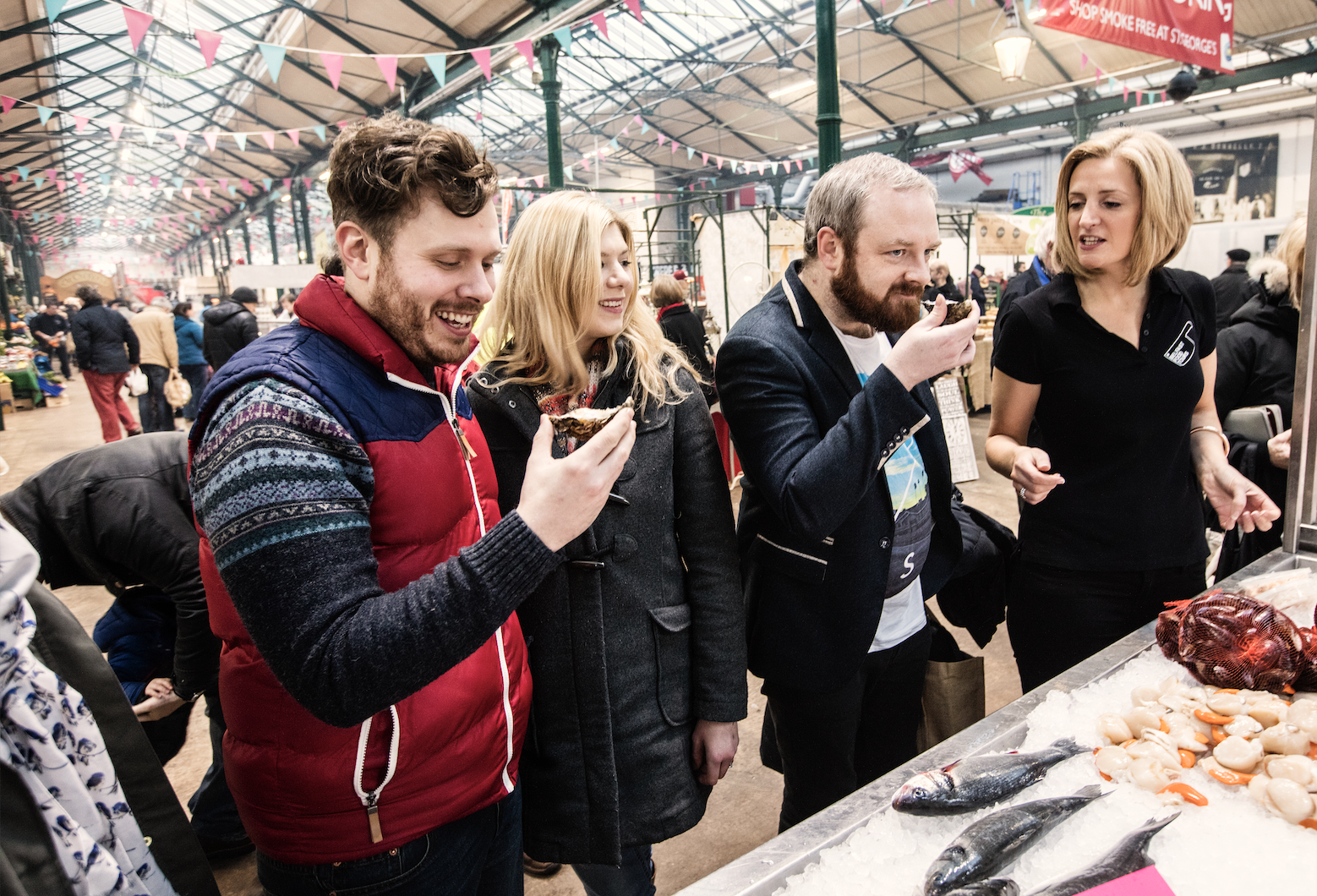
County Kerry’s scenery is showstopping — lakes and mountains in Killarney National Park, Atlantic views along the Ring of Kerry — but Kerry people have a reputation for storytelling that rivals the views.
Take a jaunting car ride through the park, and your driver won’t simply point out landmarks; he’ll recount legends, local scandals, and family lore with theatrical timing.
Tour Muckross House with a guide who makes 19th-century aristocratic life feel immediate and human rather than distant and grand.
Meet the people: Stop in a rural pub off the main Ring route. The best conversations often happen where there’s no Wi-Fi and no rush.
The Rock of Cashel rises dramatically above County Tipperary, but it comes alive through the voices that interpret it.
Irish guides have a gift: history becomes theatre. St. Patrick, high kings, Viking raids — they’re delivered with humour and a twinkle that keeps things human.
Wander down to Hore Abbey, where you may find sheep grazing among the ruins and perhaps a local photographer happy to share the best angle for your shot.
Meet the people: On a private heritage walk with a local historian, you don’t just see ruins — you meet the descendants of those who built their stories around them.
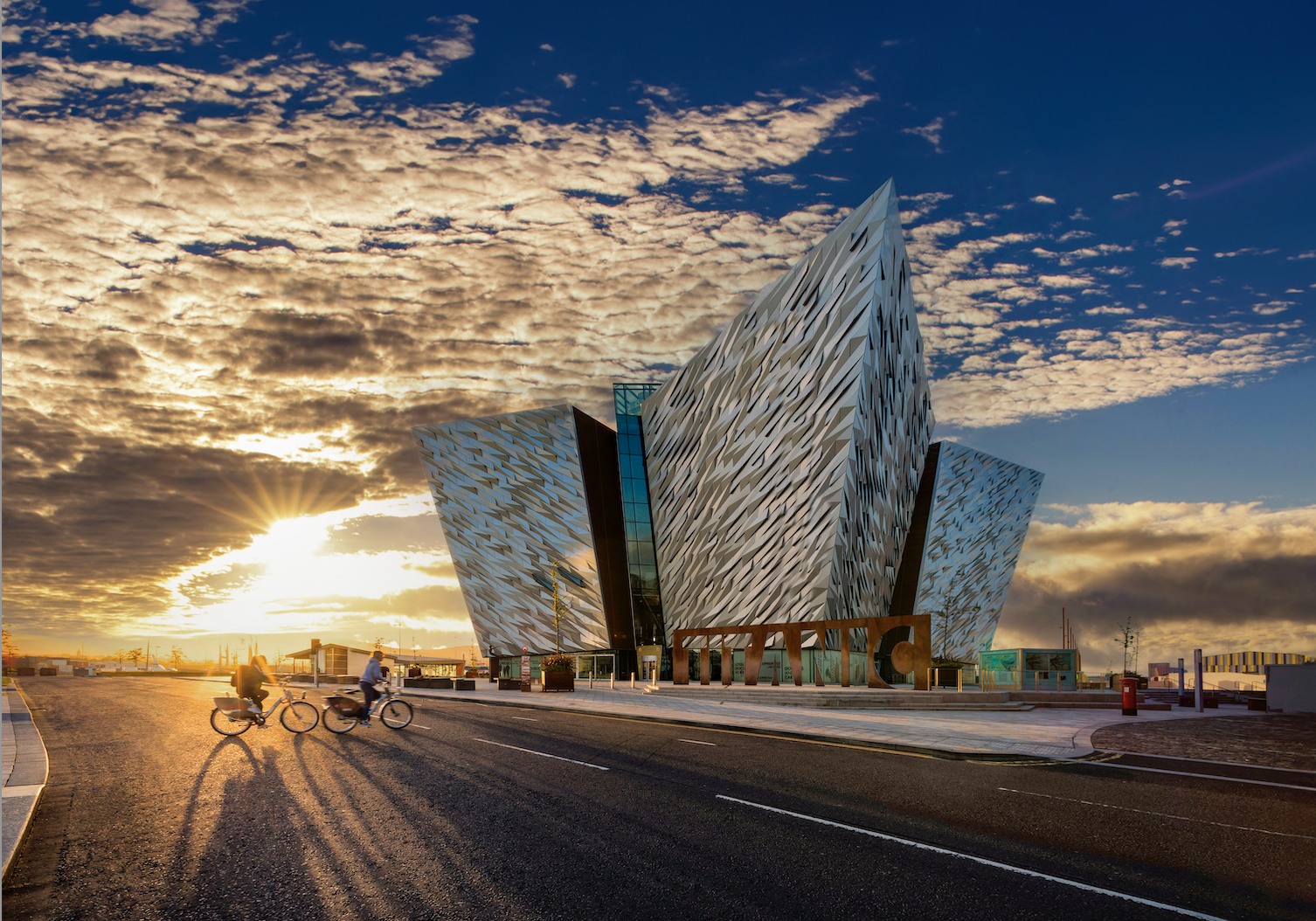
In Northern Ireland, landscapes are dramatic, but conversations can be even more so.
At Titanic Belfast in Belfast, you’ll meet guides proud of their shipbuilding heritage — honest about history, resilient about the future.
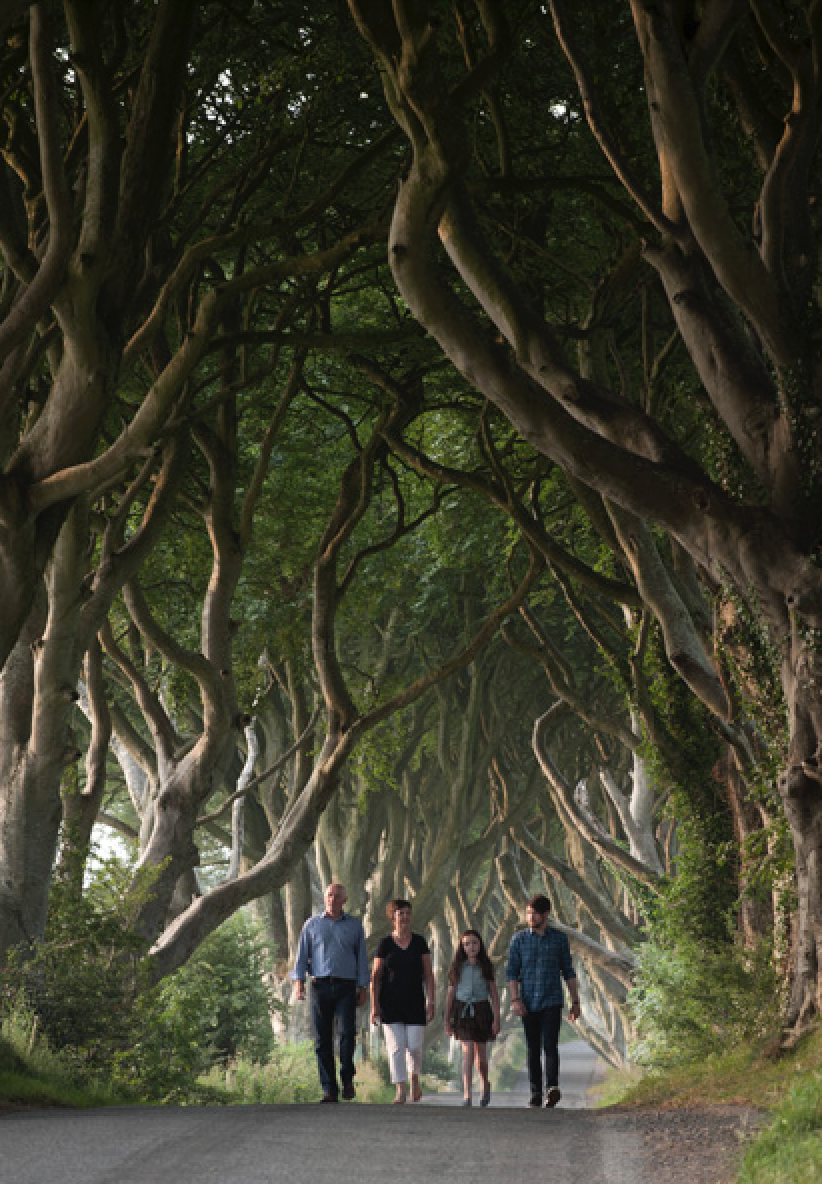
Along the coast, at the Giant's Causeway, local storytellers still recount the legend of Finn McCool as if it might be true. At the Carrick-a-Rede Rope Bridge, you’ll likely find yourself laughing nervously alongside strangers as the bridge sways.
Meet the people: Take a black cab tour in Belfast with a driver who shares personal perspectives on the city’s recent history — complex, candid, and deeply human.
Ireland’s landscapes are spectacular. But it’s the Irish people — their renowned easy humour, gift for storytelling, the sense that you’re not quite a stranger — that turns a trip into something lasting.
By: Lynn Elmhirst, travel journalist and expert
Images: Ireland.com
All rights reserved. You are welcome to share this material from this page, but it may not be copied, re-published, broadcast, rewritten, or redistributed.
by Lynn Elmhirst on 03/12/2026
Cruise lines love to break records – competing for the biggest ships, introducing firsts-at-sea, and of course, creating record-breaking events that give thousands of guests the chance to make history… well, until the record is broken again!
Princess Cruises is no stranger to world records. In 2024, the cruise line set a record for the largest pizza party at sea, with guests consuming over 60,000 slices across 16 ships. The event marked a partnership with 13-time World Pizza Champion chef Tony Gemignani, who developed exclusive artisanal pizzas for the fleet.
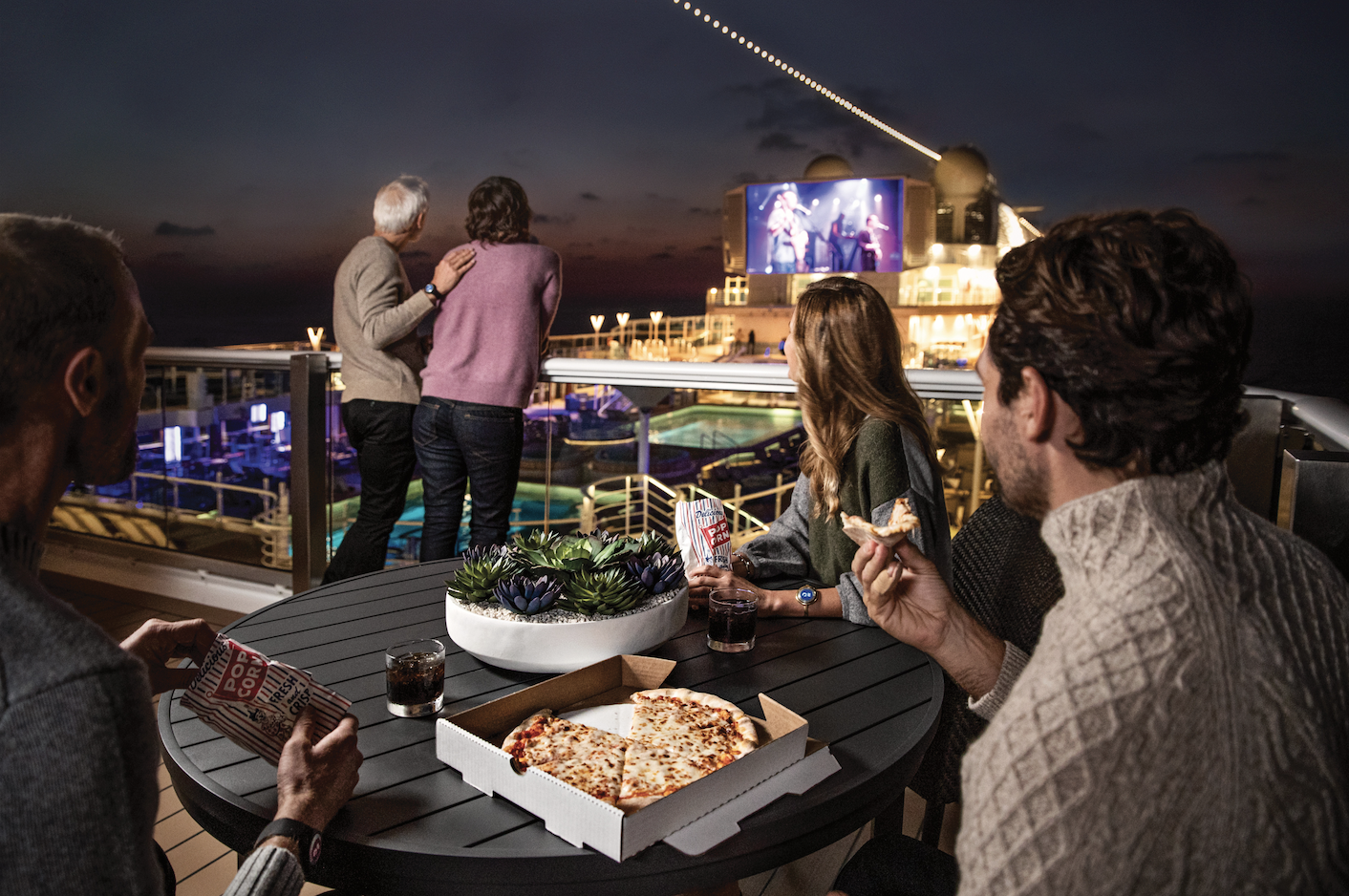
Now they’ve done it again, shifting from a favorite food to a favorite holiday cocktail.
And their margarita world record is one piece of an even bigger celebrity partnership mosaic.
On February 17, 2026, during a 7-day Western Caribbean cruise from Galveston, Texas, the Regal Princess became the location for another record-breaking party. The event turned the ship into a floating fiesta for the ship’s 3500 guests to celebrate Princess Cruises’ most popular cocktail.
Over 8 hours, the guests did their part to help break the Guinness World Record for most margaritas sold in 8 hours.
How many, you ask? Well, raise your salt-rimmed glass to the guests of the Regal Princess, who ordered 3410 handcrafted margaritas. That easily tops the previous record of 2,728 for the iconic lime-and-tequila cocktails.
What’s more, the occasion coincided with Princess Cruises marking the sale of over 1 million of its signature “24K Margaritas” between January, 2025 and January 2026.
The 24K Margarita is the fleet’s most popular signature cocktail, made exclusively with Pantalones Organic Blanco Tequila, co-founded by Matthew and Camila McConaughey.
The million-margarita milestone arrives just over one year after Princess Cruises and Pantalones Organic Tequila launched their fleetwide partnership in October 2024, quickly becoming one of the most successful beverage collaborations in cruise line history.
Camila and Matthew McConaughey are also the godparents of Princess Cruises’ most recently-launched ship, the Star Princess, the newest Sphere-class ship from Princess Cruises. They officially christened the vessel in Fort Lauderdale on November 6, 2025, using none other than a bottle of their tequila. For the world record-breaking, the couple sent a congratulatory video message that was played onboard to the guests of the Regal Princess as the record was announced, with the audience roaring its approval.
While made with Pantalones Tequila, Princess Cruises’ most popular cocktail is otherwise a classic margarita: handcrafted with Cointreau, Grand Marnier, margarita mix, and served over ice in a salted-rim glass.
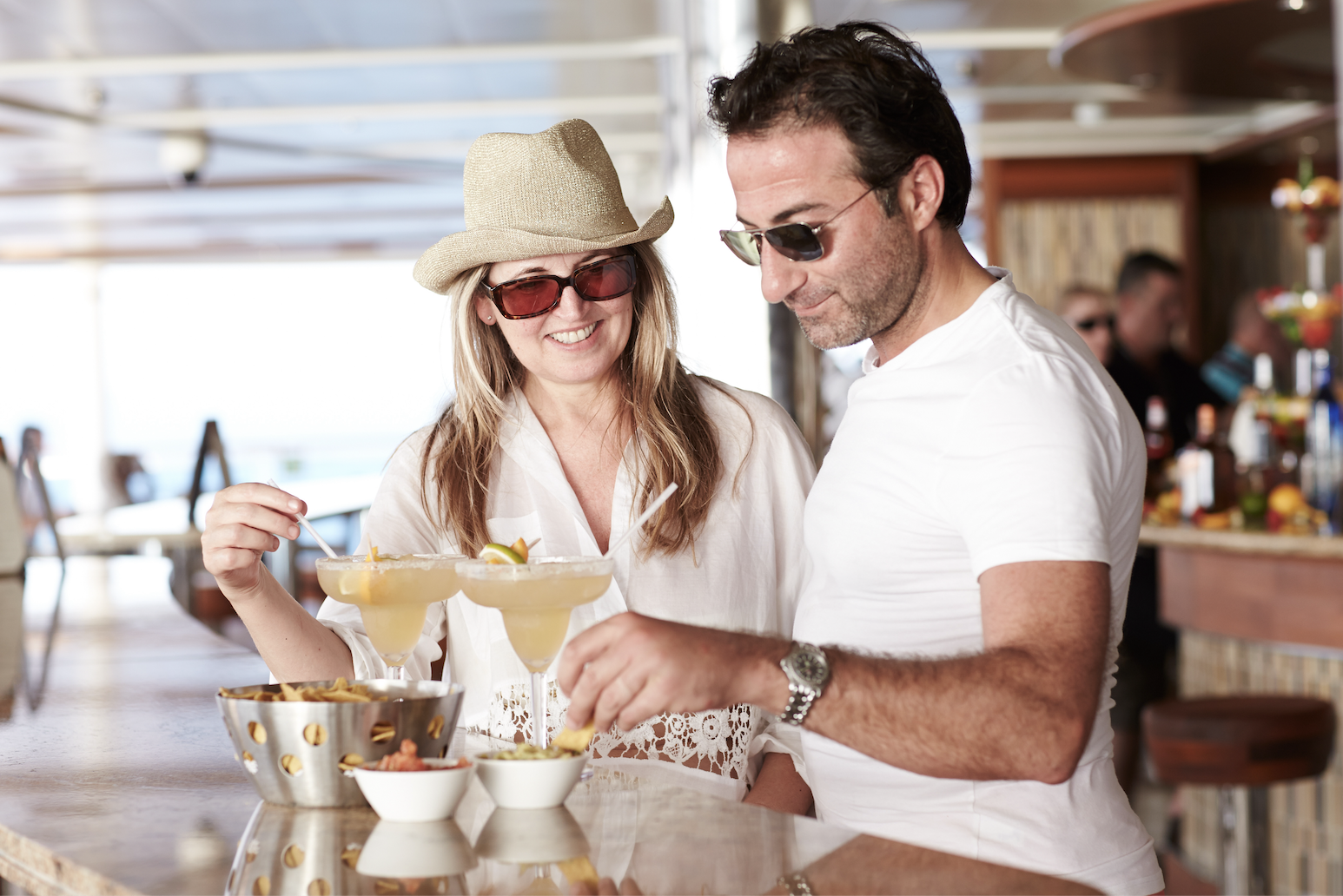
And in addition to the 24K Margarita, guests can toast their cruise with any of a lineup of handcrafted cocktails created by Princess’s Mixologist Rob Floyd has designed a menu of other margaritas using the McConaugheys’ tequila, too, like
To ensure your cravings for the cocktail never go unsatisfied, there’s even a roaming ‘Pantalones Organic Tequila Custom Cart’ capturing the ‘spirit’ of the McConaughey brand throughout the voyage.
In just over a year, having one of these cocktails on board has become an essential Princess Cruises experience fleet-wide.
And now, with the margarita world record, Princess Cruises has put a cherry on top of a celebrity brand partnership that’s a template for the kind of wild success that cruise lines – and avid cruise travelers! – are looking for.
By: Lynn Elmhirst, cruise/ travel journalist and expert
Images courtesy of Princess Cruises
All rights reserved. You are welcome to share this material from this page, but it may not be copied, re-published, broadcast, rewritten or redistributed.
by Lynn Elmhirst on 02/26/2026
Whether you are a devotee of the Chinese/ Lunar calendar, for many of us, horses are our spirit animals, and the Year of the Horse reminds us why. Since the earliest civilizations – is any other creature so well-represented on the world’s cave walls, ancient scripts, wall carvings? - Humans around the world have fallen in love with the majesty, power, elegance, intelligence and awe-inspiring beauty of horses. Not to mention utility. Horses became invaluable companions in agriculture, early industry, war and transportation. In connection with what may be human’s / history changing relationship with a single animal.
As technology advanced, our relationship with horses everywhere has changed… but in many places, our love affair with horses and riding traditions continues.
Here are just a few of the best experiences in some cultures with rich, storied equestrian traditions. As a spectator or an active participant, here are places to celebrate your inner equine spirit.
In sun-washed Andalusia, horses are woven into the fabric of history, life, and human drama. They even become high art at the Royal Andalusian School of Equestrian Art.
Here, gleaming Andalusian stallions perform intricate dressage choreographed to Spanish music — precision elevated to poetry, with distinctive historic costumes that remind us that to be Spanish is to ride (pictured, top).
The main attraction is the performance itself, but visitors can tour the stables, watch training sessions and even book riding lessons with school-trained instructors for a deeper connection.
It’s refinement rather than raw adventure — and utterly mesmerizing.
Beneath the extraordinary chandeliers at Vienna’s palatial, Baroque Spanish Riding School, legendary Lipizzaner stallions perform their famed “airs above the ground” — levades, caprioles, equine dance movements that seem to defy gravity.
The atmosphere is hushed, reverent. Attend morning exercise sessions for a more intimate look at training in progress.
Visitors cannot ride the Lipizzaners themselves, but private carriage tours in Vienna and riding schools throughout Austria allow travelers to connect with the broader equestrian culture.
Its heritage is preserved in military tailcoats and centuries-old tradition.
Meanwhile, English polo is outdoor summer theatre -with a competitive edge and Royal pageantry.
At Guards Polo Club near Windsor and Cowdray Park Polo Club in West Sussex, the British season unfolds on immaculate emerald fields. Spectators sip the classic British polo cocktail, Pimm’s punch, picnic beside the pitch and stroll out to stomp divots between chukkas.
The matches are fast and tactical — ponies pivoting sharply, mallets striking with precision.
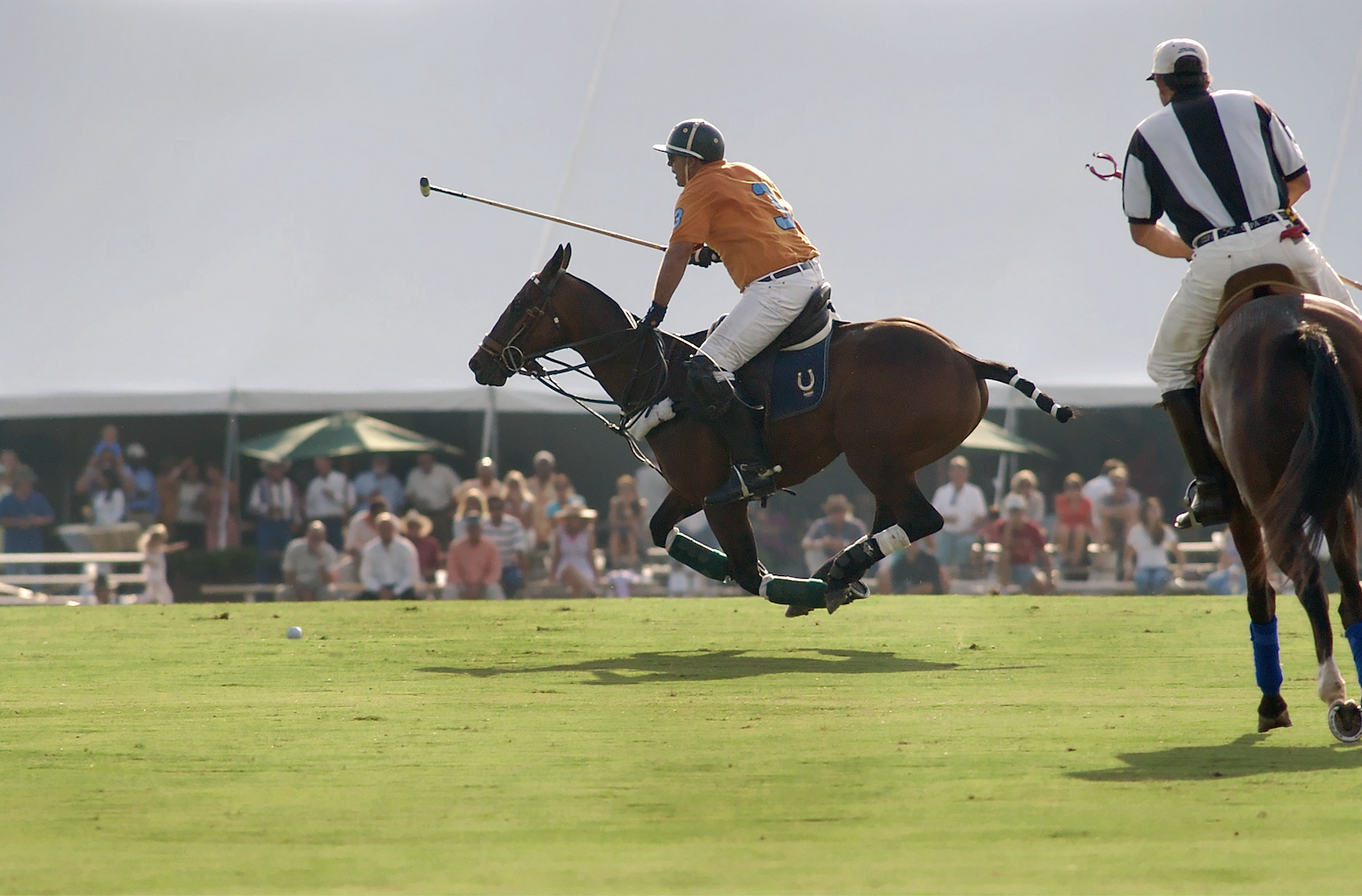
Travelers can attend major tournaments as spectators, book hospitality enclosures, or – if you’re a rider - arrange beginner polo lessons at affiliated clubs outside tournament play.
It’s sport wrapped in ceremony — linen, horsepower and long golden evenings.
In Chilean Patagonia, horses aren’t a novelty or a nod to history — they’re part of everyday ranching life.
On remote Argentine estancias, herding days unfold on horseback across grasslands beneath Andean peaks. Gauchos ride with effortless authority over the landscape, horse and rider equally proud. Rivers are crossed without fuss; sheep are herded with quiet whistles.
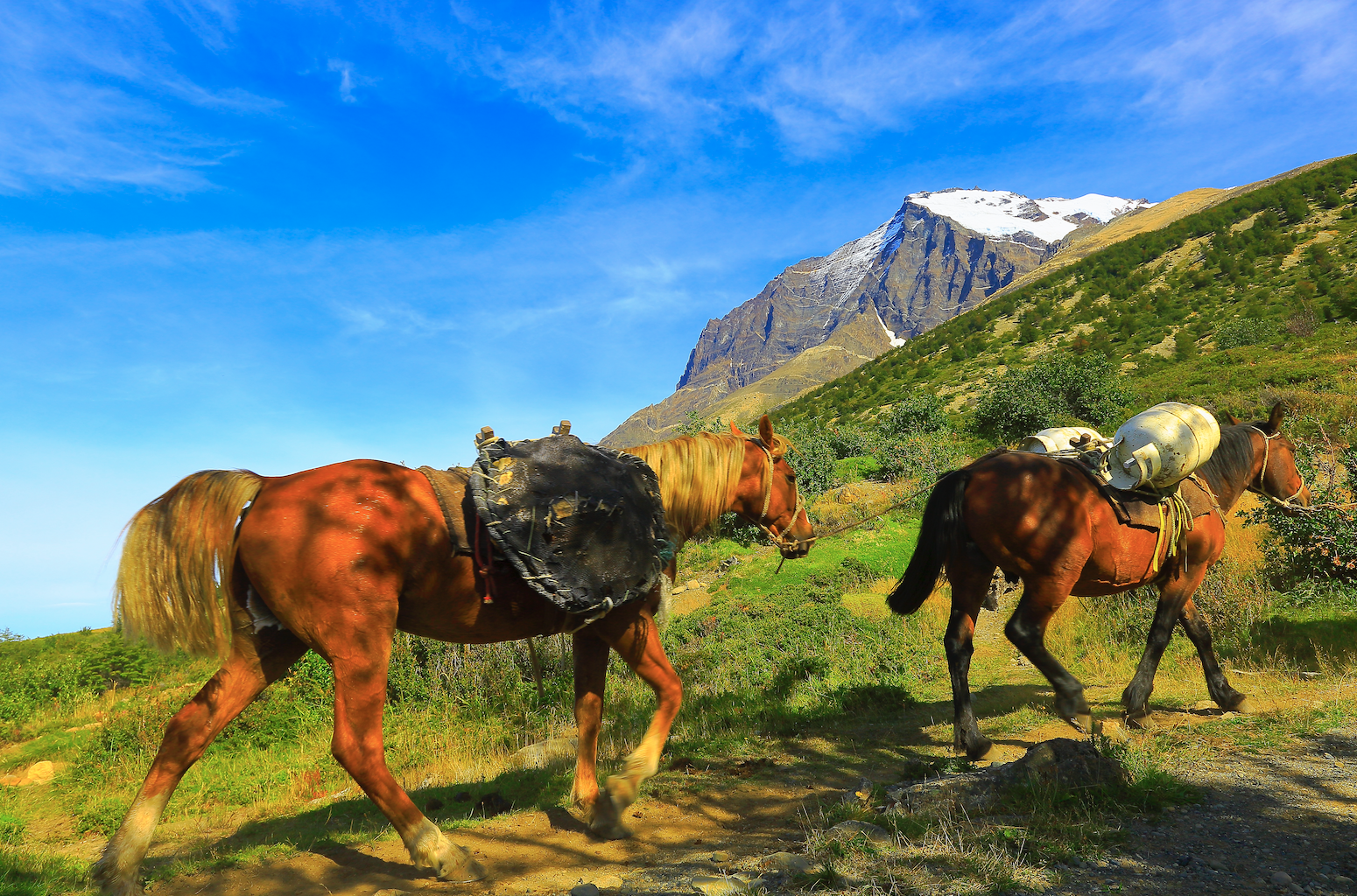
Travelers don’t just watch — you can jump into the saddle too. Ride alongside working gauchos on half-day, full-day or multi-day estancia programs. No elite experience required; the horses are steady, the pace immersive rather than intimidating. You’re traveling at the speed of sheep, after all.
Evenings end with asado around an open fire and the deep sleep of a day spent outdoors. You won’t need reminding to forgo your devices and stop worrying about wifi. Patagonia teaches rhythm.
Few silhouettes are more cinematic than an Arabian horse against the Sahara sands. On your next trip to Morocco, forgo a camel ride in favor of a horse expedition.
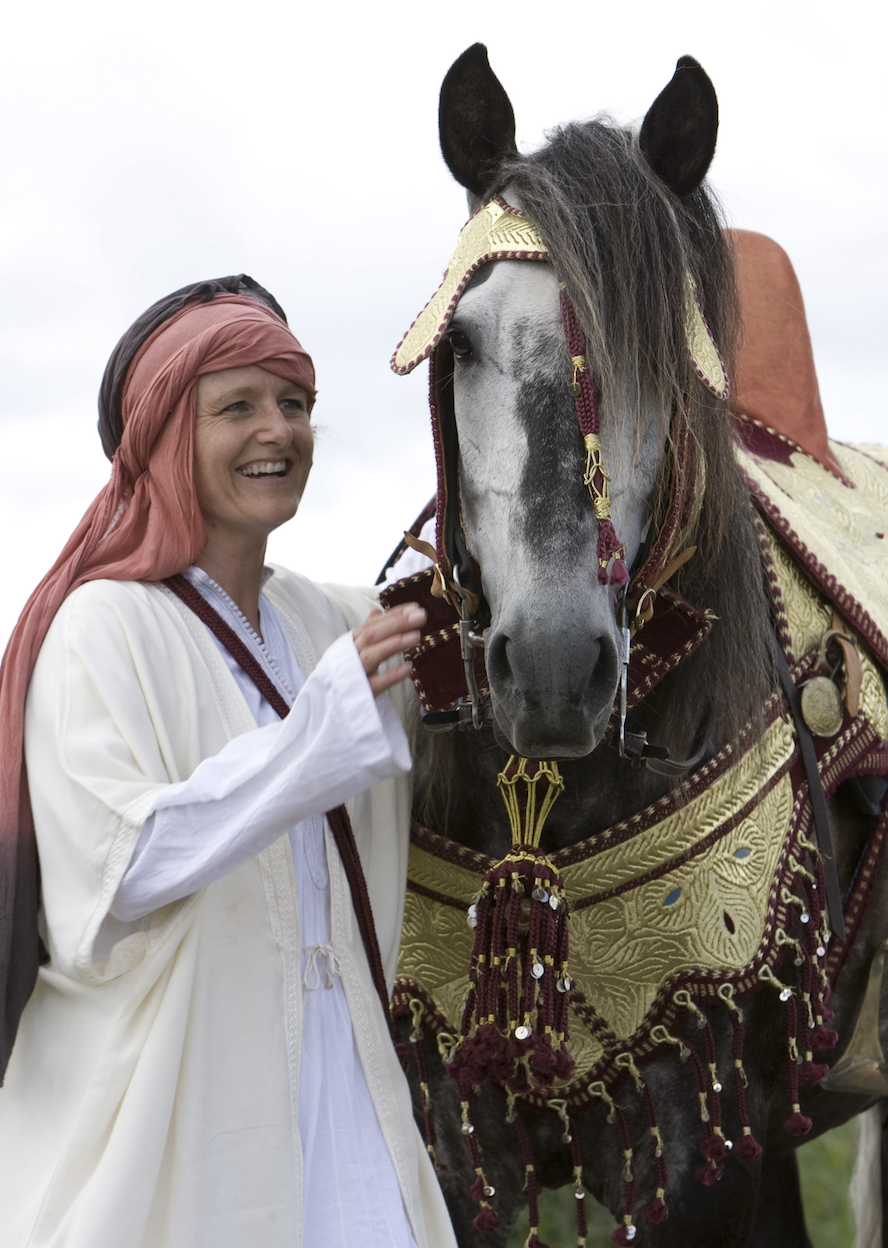
Canter along Atlantic beaches near Essaouira or venture inland for guided desert treks across golden dunes. Fabled Arabian horses are spirited but sure-footed, led by Berber guides who balance adventure with safety.
You may even witness a fantasia — ceremonial horsemen charging in synchronized bursts of thunder.
***
Make the Year of the Horse the year you reconnect with the ancient, primal human tie to hoofbeats in the world’s epic landscapes and cultures.
Images: Getty
All rights reserved. You are welcome to share this material from this page, but it may not be copied, re-published, broadcast, rewritten or redistributed.
by Lynn Elmhirst on 02/26/2026
When you start to see Easter candy on the shelves, you know it’s time for… Carnival! It’s one of the biggest celebrations – that looks wildly different! - in countries around the world.
While always colorful, Carnival is celebrated with such intensely localized traditions that it’s easy to forget that all the Carnivals have the same medieval roots. Christians prepared themselves for the most solemn holy day of Easter by spending the preceding 40 days – called “Lent” – fasting, praying, giving alms and in contemplation of the upcoming miraculous holiday.
That meant that the last couple of days before the beginning of Lent, households rid themselves of anything tempting or forbidden during the time of pious restrictions.
“Carnival” comes from the Latin “carne vale” or “farewell to meat,” and Carnival became a final indulgence before the privations of Lent. On the Christian calendar, Lent begins on “Ash Wednesday.” So Tuesday was your last chance. The French expression “Mardi Gras” means “Fat Tuesday” – time to eat all the rich food in the house before Lent so it wouldn’t go to waste.
Over time, Carnival or Mardi Gras evolved into wild celebrations of dance, drink, disguises, food and music.
And as Christianity spread around the world, Carnival evolved into wildly different expressions of local culture, cuisine, climate… and even resistance.
Here are some of the world’s most different – and irresistible - Carnivals to inspire you to travel and celebrate in February!
The Venice Carnival is one of the world’s most iconic and is uniquely symbolized by masks and historic costumes, even today. Here, Carnival isn’t loud; it’s theatrical and dramatic. The city’s lagoon-softened light, historic palazzi and gliding gondolas provide the perfect backdrop for a festival built on concealment and social inversion.
Historically, Venetian masks allowed nobles and commoners to all appear anonymous and mingle freely, gambling and gossiping beyond class constraints before returning to the usual strict social order on the first day of Lent.
Today, the tradition endures in the form of exquisitely crafted masks, silk capes, and full 18th-century costumes that transform St. Mark’s Square into a living panorama every Carnival season. Rather than parades and public parties, Venice offers moments: a masked figure gliding over a bridge at dawn, candlelit balls in Renaissance palaces, or quiet promenades along misty canals.
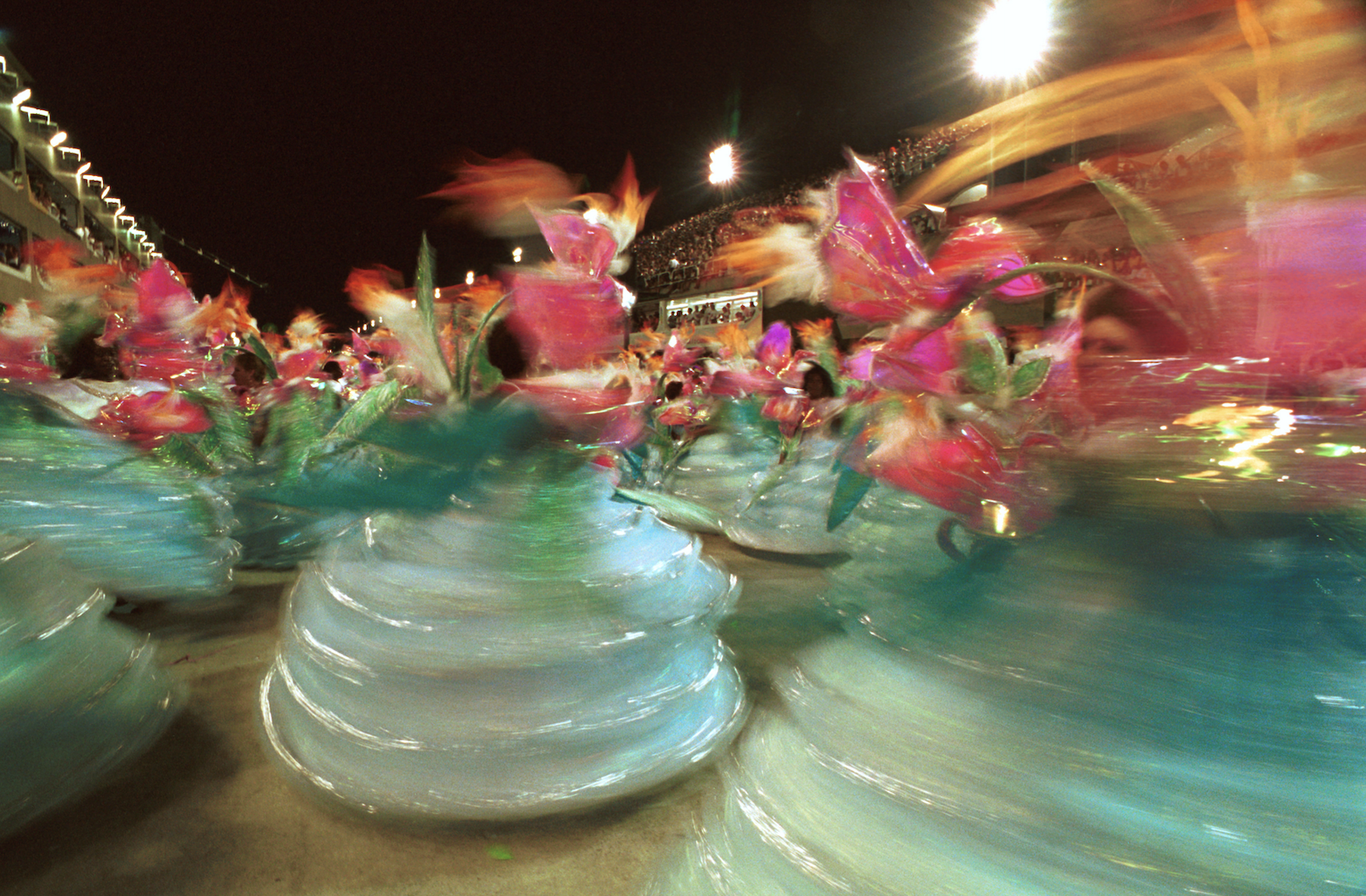
If Venice whispers, Rio roars. Carnival in Rio de Janeiro is a full-throttle experience, driven by samba, sweat, and spectacle. Born from Afro-Brazilian traditions and shaped in working-class neighborhoods, Rio’s Carnival is both celebration and competition. The centerpiece is the Sambadrome, where elite samba schools spend all year preparing elaborate floats, choreography, and politically charged themes for a single night of emotional release, competition in the Sambadrome and chaos on the streets.
Rio’s Carnival blocos—street parties—spill through neighborhoods, inviting anyone with a pulse to join. Fueled by caipirinhas made with a local sugarcane spirit, cachaca, even if you’ve never danced the samba before, you’ll discover the rhythm within you to join in Rio’s spirit of Carnival.
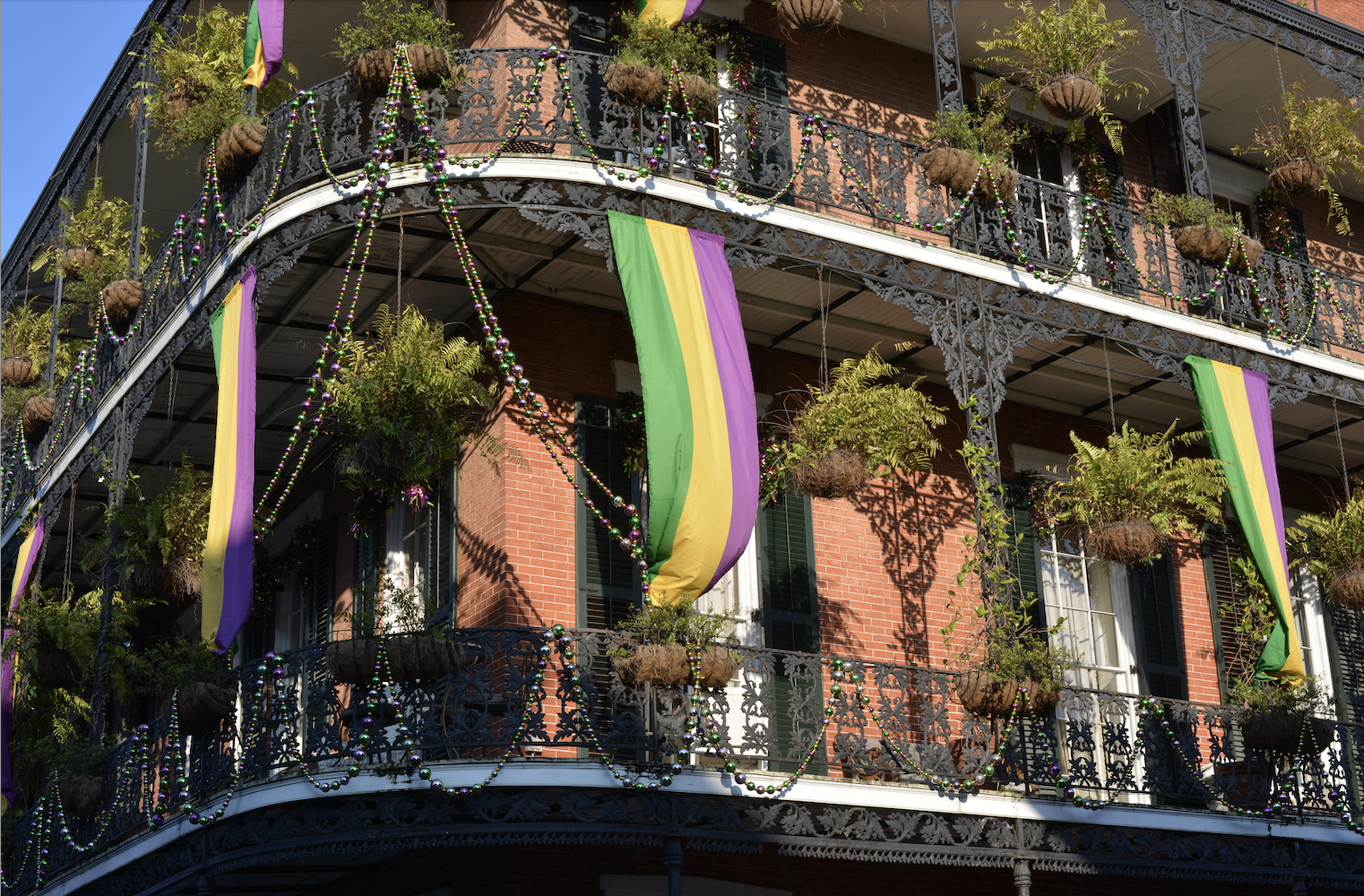
In NOLA, Carnival goes by a different name. Mardi Gras celebrations here have become legendary, making the birthplace of jazz one of the top Carnival destinations every February.
“Krewes,” some centuries old, plan extravagant parades with military precision, while the streets erupt in beads, music, and color. New Orleans’ Mardi Gras symbols are legendary: purple-green-and-gold beads tossed from ornate floats, masked krewe royalty like Rex and Zulu, hand-decorated coconuts, jazz bands on street corners, and the ever-present slice of king cake hiding its tiny baby inside.
Mardi Gras here isn’t just European Christian. It’s deeply rooted in the cultures that blended in this historic port city: French, African, Caribbean, and American South traditions into something unmistakably local. It’s a festival that belongs to the city’s people as much as its visitors—and one where tradition matters as much as the party.
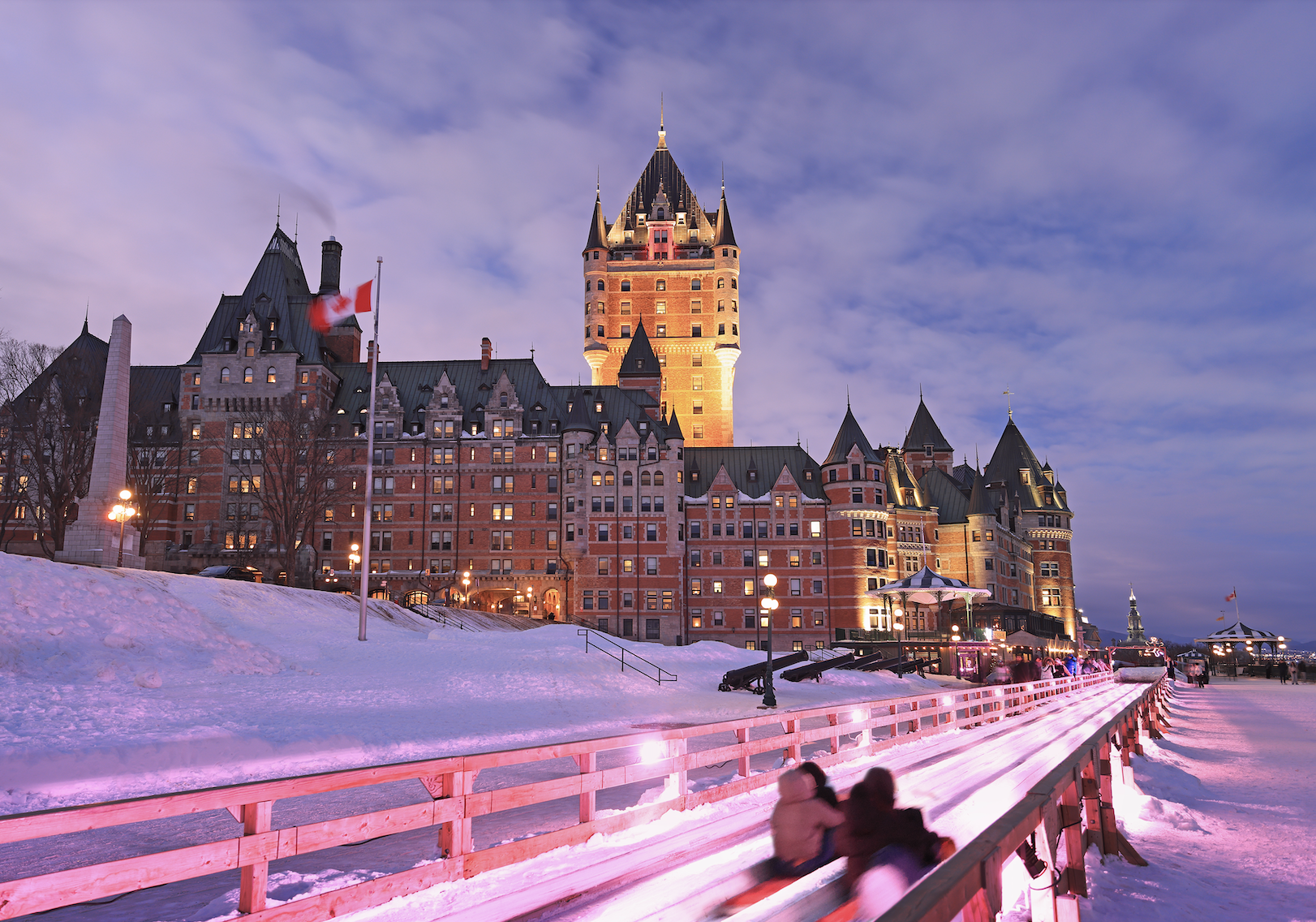
Quebec City flips the Carnival script entirely by celebrating the coldest days of an unforgiving Canadian winter. The Québec Winter Carnival, held deep in February, proves that pre-Lenten revelry doesn’t require heat—just heart (and layers). Its cheerful snowman mascot, Bonhomme, presides over ice palaces, night parades, canoe races across the frozen St. Lawrence River, and plenty of caribou (a spiced maple liquor, not the animal).
This is Carnival as resilience and French Canadian culture: a celebration of endurance, community, and winter cheer. Where other Carnivals strip down, Quebec bundles up—and finds just as much joy.
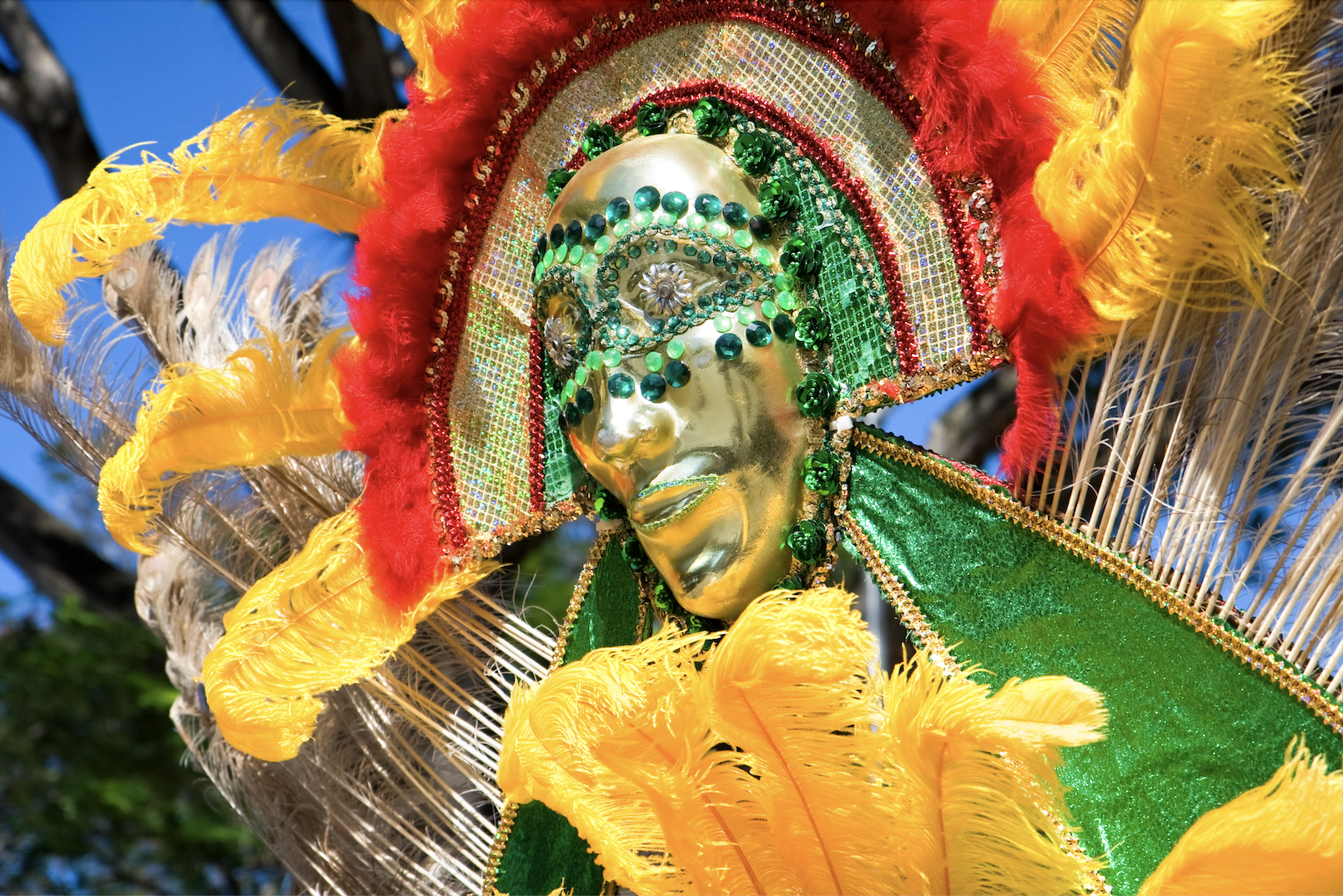
Few places embody Carnival’s original spirit of liberation as powerfully as Trinidad. Emerging from the aftermath of slavery and colonial rule, Trinidad Carnival is rooted in resistance and self-expression.
Carnival in Port of Spain grew out of emancipation, when formerly enslaved Africans claimed the streets after 1834 and transformed an elite European masquerade into a bold expression of freedom and identity. Traditions like J’ouvert, steel pan music, and satirical mas characters remain acts of cultural resistance—celebrating liberation through rhythm, costume, and unapologetic public joy.
J’ouvert—held before dawn—sees revelers covered in mud, paint, or oil, reclaiming the streets to the beat of steel pan and soca. Later come the dazzling masquerade bands, where costume, movement, and music merge into something ecstatic and a declaration of identity, joy, and survival.
From Venetian masks to Caribbean mud, from samba drums to snow palaces, Carnival proves that a shared ritual can take on endlessly diverse faces. Wherever you find it, Carnival invites participants to join in the spirit and rituals of a united community.
Images: Getty
All rights reserved. You are welcome to share this material from this page, but it may not be copied, re-published, broadcast, rewritten or redistributed.
by Lynn Elmhirst on 02/12/2026
 Shawna Schrank
Sign up for our newsletter to learn about the latest product news and deals. Also receive exclusive offers, contest details and giveaways.