
You likely already know that’s a trick question. This tiny dot in the eastern South Pacific Ocean, but technically a territory of Chile, is actually properly called Rapa Nui.
The world over, Easter Island has been synonymous with exotic mysteries of an impossibly distant, long-lost civilization and mind-boggling human endeavor.
It may be the most remote inhabited island on the planet. Only a few thousand people live on this remnant of oceanic volcanoes sticking out of the sea, and that's the first miracle itself. The closest inhabited island is 1300 miles away (Pitcairn Island with only 50 people), and the nearest continental point is Chile, over 2000 miles away. Local tales say a 2-canoe Polynesian expedition around AD 700 was the start of Rapa Nui's extraordinary story.
Today, Easter Island is on the map as one of the corners of the millions of square miles of the Pacific Ocean known as Polynesia – the other corners for easy reference are Hawai’I and New Zealand. And it’s on the map of global travelers who want to come face to face with the island's nearly 1000 moai at its UNESCO World Heritage Site.
These stately, solemn statues were carved during a 500-year period in the island's history, beginning a thousand years ago. The moai share artistic characteristics with Polynesian carvings, confirming the origin tale of the Rapa Nui people. Chiseled with only stone tools out of volcanic rock in the 'quarry' of an extinct volcano, each statue took a team of half a dozen artisans about a year to complete. The largest is over 30 feet long and weighs 90 tons. They were an incredible feat of creativity, production, and organization.
You probably think of them as 'Easter Island heads'. But the moai actually have torsos, and some even have complete lower bodies; they were just buried up to their necks over the centuries by shifting sands.
These monumental statues represented deceased ancestors. And only about a quarter were originally installed; others were left in the quarry or remained en route to their intended locations. All but 7 faced inland, the spirits of the deceased 'watching over' the living and their lands. The 7 facing the sea stood as wayfinders for seafarers.
Many moai were toppled after the mysterious collapse of the Rapa Nui society in the 19th century. In recent decades, local and international efforts have restored and re-mounted a number of moai. This dot on a map in Chilean Polynesia still seems as awe-inspiring and as full of hidden secrets as when explorers first arrived.
Which brings us to: Why is it called Easter Island? The Dutch explorer who was the island's first-recorded European visitor arrived on Easter Sunday in 1722 – he came upon it while searching for another island. (He must have been pretty lost!) So 'Easter Island' it was dubbed, and its current official Spanish name in Chile is still Isla de Pascua, while its Polynesian name is Rapa Nui, in the local language: the 'naval of the world'.
There's more to Rapa Nui than the silent witness of the moai to the island's past. Visitors experience the local version of Polynesian culture, explore pink-sand beaches, caverns, and dive sites, cycle, hike, or ride horses across prairies and volcanic hillsides, and even surf on those waves so distant from other shores.
How to get there? You can fly from both Chile and Tahiti, participate in tour packages offered by expedition and exotic travel experts, arrive by small or expedition cruise ship, or by private yacht.
There may be nowhere else in the world where a traveler can feel the greatness of human achievement and small in the face of a culture so far across the waves.
By: Lynn Elmhirst, travel journalist and expert.
Images: Getty
All rights reserved. You are welcome to share this material from this page, but it may not be copied, re-published, broadcast, rewritten, or redistributed.
by Lynn Elmhirst on 03/26/2026
World travel is easier than ever. But it seems world geography is not! Some destinations remain stubbornly — and even hilariously — confused by travelers, media, and even governments. The result is a mix of comedy, branding opportunity, and unsuspecting travelers finding themselves in the wrong place.
In some cases, people simply don’t know the difference, and it’s a case of mistaken identity and some embarrassing social media posts. Others are tiny spelling errors that have landed travelers on the opposite side of the world from where they expected to be. There are cities, countries, and regions that regularly get confused.
Admit it: even an intelligent and savvy traveler like you gets some of these destinations mixed up!
So what better time than April Fools to run through the hit parade of trickster travel destinations?
Australia and Austria are as different as two countries can be. And in different hemispheres!
Australia is a young, vast, sun-drenched country defined by distance—beaches, reef systems, and cities like Sydney that feel plugged into the Pacific. It’s long-haul, laid-back, and larger-than-life.
Old World Austria is compact, landlocked, and classically European—Alpine peaks, imperial history, and cultural heavyweights like Vienna and Salzburg.
Yet their confusion is so persistent that Austria’s tourism board leaned into it with the now-famous line: “No Kangaroos in Austria!”
This is possibly the most politely awkward confusion in global travel.
So common, in fact, that Visit Sweden launched an entire campaign to address it—complete with a straight-faced “negotiation” video proposing a formal division of national identities.
The messaging is brilliantly deadpan:
Switzerland has banks; Sweden has sandbanks
Switzerland has yodelling; Sweden has a silent nature
The Swiss keep the watches; the Swedes offer the luxury of forgetting about time
It’s funny because it’s true. The confusion shows up in headlines, speeches, and travel plans more often than any half-experienced traveler would like to admit.
“Tomayto”, “Tomahto.” Grenayda, Granahda. Two destinations thousands of miles apart, and cultural worlds apart.
Grenada is a Caribbean island nation where there’s nutmeg in the air, rainforest spilling into the sea, and long, languid afternoons on Grand Anse. It’s called the “Spice Island” for a reason.
Granada, on the other hand, is a city in Spain: Moorish palaces, tapas culture, and the architectural marvel of the Alhambra rising above the city like a mirage.
One is barefoot, the other is baroque.
This is less a mix-up and more a recurring travel identity crisis. They’re both countries, and both in the Caribbean. But that’s where the similarity ends.
Dominica (dom-in-EE-ka) is volcanic, rainforest-thick, and defiantly underdeveloped. You go here to hike, to soak in hot springs, to earn your cocktail off the beaten track. You have to work a little harder to vacation in Dominica. You won’t find direct flights from North America. Instead, you connect on Island Hopper Airlines through regional hubs like Barbados, San Juan, and St. Lucia.
The Dominican Republic is a hub. It’s one of the Caribbean’s largest countries and most popular beach resort destinations —built for sun-seeking travelers, with resort areas like Puerto Plata and Punta Cana, and a rich colonial history in Santo Domingo. All-inclusive resorts line the country’s beaches, and airlines and packaged tour operators serve the country well.
Here’s a quick test: can you place these two Central European countries on a map?
Slovakia and Slovenia don’t just sound similar—they both fly under the radar of popular European travel destinations, so they’ve gotten used to handling the non-stop cases of mistaken identity.
Embassies have long reported receiving each other’s diplomatic pouches. Invitations to official events have arrived in the wrong capital. Trade documents, cultural exchanges, even the occasional VIP correspondence—misaddressed, misrouted, and then, very politely, forwarded along. The postal services of the two countries meet regularly to exchange misaddressed mail!
Meanwhile, the destinations themselves couldn’t be more distinct. Slovakia leans into its Danube River culture, castles, and Carpathian drama; Slovenia into alpine lakes and storybook perfection—hello, Lake Bled.
This one is a classic travel-writer slip—and a reminder that “similar-sounding” regions are not all created equal.
The Baltics are the three countries on northeastern Europe’s Baltic Sea coast: Estonia, Latvia, and Lithuania. They share a common history shaped by Northern and Eastern Europe and are today known for compact capitals, medieval old towns, and a blend of Nordic and Eastern European influences. Cool, composed, and increasingly design-forward. Think Tallinn’s medieval perfection, Riga’s Art Nouveau swagger.
The Balkans refer to a broader region in southeastern Europe that includes countries such as Croatia, Serbia, Montenegro, Albania, Bosnia and Herzegovina, and North Macedonia. The region is culturally diverse, shaped by Ottoman and Austro-Hungarian histories, and ranges from Adriatic coastlines to inland mountains. Sunshine and history weave through a tangle of cultures that stretch across southeastern Europe, from Adriatic coastlines to inland capitals shaped by empires.
Same opening syllable. Entirely different narratives.
It always happens to someone else you can laugh at - until it’s you landing in the wrong country. Even the most seasoned travelers can be tripped up by a familiar-sounding place and a hastily confirmed booking.
Work with an expert travel advisor, and always double-check your travel documents.
Happy April Fool’s Day… and
By: Lynn Elmhirst, travel journalist and expert
Images: Getty
All rights reserved. You are welcome to share this material from this page, but it may not be copied, re-published, broadcast, rewritten, or redistributed.
by Lynn Elmhirst on 03/26/2026
On St. Patrick’s Day, the saying goes, there’s a ‘little bit of Irish’ in us all. For some of us, it’s true all year round. Today, Ireland has about 5 million people. But there are over 30 million Americans (10% of the entire population, the second-highest European ancestry in the USA!) and an even higher percentage of Canadians – nearly 15% of the population – who claim Irish roots.
No wonder so many North Americans feel drawn to visit the Emerald Isle on St. Patrick’s Day and throughout the year.
Many people fly into Dublin, have a grand time, and leave.
But to really get a feel for the country – and the people you may have an ancestral connection with – you need to get out of the capital – and into the countryside.
Of course, if you know the county where you may have family roots, you’ll want to start there.
And here are 5 more of the best places and experiences beyond Dublin to connect with the Irish people. So you can get a real sense, like I did when I first set foot in the Irish countryside, that “These people are my people.”
The Cliffs of Moher may draw you west, but it’s the village of Doolin that keeps you there.
After standing at the cliff’s edge, Atlantic wind in your hair, step into a low-ceilinged pub where the music begins almost casually — a fiddle tuning, a bodhrán tapped into rhythm. No stage. No spotlight. Just musicians playing because that’s what you do on a Tuesday night in County Clare.
Locals will ask where you’re from. Someone’s cousin likely lives there. By the end of the evening, you’re clapping along, perhaps attempting a chorus you don’t quite know.
Meet the people: Some tours connect you with a local farmer-guide in the nearby Burren who explains how his family has worked this limestone land for generations. The geology – and the family stories - are fascinating.

Galway feels like Ireland’s creative pulse. Buskers line the cobbled streets, poets argue amiably over pints, and Irish (Gaeilge) floats through the air as naturally as a sea breeze.
Head into Connemara National Park and you’ll find a different rhythm — sheep farmers leaning on gates, artisans weaving wool, guides who can trace their lineage back through the valleys.
At Kylemore Abbey, Benedictine nuns still maintain the Victorian walled gardens. The abbey’s romantic silhouette may be what you photograph, but it’s the quiet devotion of those who care for it that lingers.
Meet the people: On a food tour in Galway led by a local who introduces you not just to oysters and farmhouse cheeses, you’ll meet the producers themselves — people whose pride in place is as rich as the flavors.

County Kerry’s scenery is showstopping — lakes and mountains in Killarney National Park, Atlantic views along the Ring of Kerry — but Kerry people have a reputation for storytelling that rivals the views.
Take a jaunting car ride through the park, and your driver won’t simply point out landmarks; he’ll recount legends, local scandals, and family lore with theatrical timing.
Tour Muckross House with a guide who makes 19th-century aristocratic life feel immediate and human rather than distant and grand.
Meet the people: Stop in a rural pub off the main Ring route. The best conversations often happen where there’s no Wi-Fi and no rush.

The Rock of Cashel rises dramatically above County Tipperary, but it comes alive through the voices that interpret it.
Irish guides have a gift: history becomes theatre. St. Patrick, high kings, Viking raids — they’re delivered with humour and a twinkle that keeps things human.
Wander down to Hore Abbey, where you may find sheep grazing among the ruins and perhaps a local photographer happy to share the best angle for your shot.
Meet the people: On a private heritage walk with a local historian, you don’t just see ruins — you meet the descendants of those who built their stories around them.

In Northern Ireland, landscapes are dramatic, but conversations can be even more so.
At Titanic Belfast in Belfast, you’ll meet guides proud of their shipbuilding heritage — honest about history, resilient about the future.
Along the coast, at the Giant's Causeway, local storytellers still recount the legend of Finn McCool as if it might be true. At the Carrick-a-Rede Rope Bridge, you’ll likely find yourself laughing nervously alongside strangers as the bridge sways.
Meet the people: Take a black cab tour in Belfast with a driver who shares personal perspectives on the city’s recent history — complex, candid, and deeply human.
Ireland’s landscapes are spectacular. But it’s the Irish people — their renowned easy humour, gift for storytelling, the sense that you’re not quite a stranger — that turns a trip into something lasting.
By: Lynn Elmhirst, travel journalist and expert
Images: Ireland.com
All rights reserved. You are welcome to share this material from this page, but it may not be copied, re-published, broadcast, rewritten, or redistributed.
by Lynn Elmhirst on 03/12/2026
Cruise lines love to break records – competing for the biggest ships, introducing firsts-at-sea, and of course, creating record-breaking events that give thousands of guests the chance to make history… well, until the record is broken again!
Princess Cruises is no stranger to world records. In 2024, the cruise line set a record for the largest pizza party at sea, with guests consuming over 60,000 slices across 16 ships. The event marked a partnership with 13-time World Pizza Champion chef Tony Gemignani, who developed exclusive artisanal pizzas for the fleet.

Now they’ve done it again, shifting from a favorite food to a favorite holiday cocktail.
And their margarita world record is one piece of an even bigger celebrity partnership mosaic.
On February 17, 2026, during a 7-day Western Caribbean cruise from Galveston, Texas, the Regal Princess became the location for another record-breaking party. The event turned the ship into a floating fiesta for the ship’s 3500 guests to celebrate Princess Cruises’ most popular cocktail.
Over 8 hours, the guests did their part to help break the Guinness World Record for most margaritas sold in 8 hours.
How many, you ask? Well, raise your salt-rimmed glass to the guests of the Regal Princess, who ordered 3410 handcrafted margaritas. That easily tops the previous record of 2,728 for the iconic lime-and-tequila cocktails.
What’s more, the occasion coincided with Princess Cruises marking the sale of over 1 million of its signature “24K Margaritas” between January, 2025 and January 2026.
The 24K Margarita is the fleet’s most popular signature cocktail, made exclusively with Pantalones Organic Blanco Tequila, co-founded by Matthew and Camila McConaughey.
The million-margarita milestone arrives just over one year after Princess Cruises and Pantalones Organic Tequila launched their fleetwide partnership in October 2024, quickly becoming one of the most successful beverage collaborations in cruise line history.
Camila and Matthew McConaughey are also the godparents of Princess Cruises’ most recently-launched ship, the Star Princess, the newest Sphere-class ship from Princess Cruises. They officially christened the vessel in Fort Lauderdale on November 6, 2025, using none other than a bottle of their tequila. For the world record-breaking, the couple sent a congratulatory video message that was played onboard to the guests of the Regal Princess as the record was announced, with the audience roaring its approval.
While made with Pantalones Tequila, Princess Cruises’ most popular cocktail is otherwise a classic margarita: handcrafted with Cointreau, Grand Marnier, margarita mix, and served over ice in a salted-rim glass.

And in addition to the 24K Margarita, guests can toast their cruise with any of a lineup of handcrafted cocktails created by Princess’s Mixologist Rob Floyd has designed a menu of other margaritas using the McConaugheys’ tequila, too, like
To ensure your cravings for the cocktail never go unsatisfied, there’s even a roaming ‘Pantalones Organic Tequila Custom Cart’ capturing the ‘spirit’ of the McConaughey brand throughout the voyage.
In just over a year, having one of these cocktails on board has become an essential Princess Cruises experience fleet-wide.
And now, with the margarita world record, Princess Cruises has put a cherry on top of a celebrity brand partnership that’s a template for the kind of wild success that cruise lines – and avid cruise travelers! – are looking for.
By: Lynn Elmhirst, cruise/ travel journalist and expert
Images courtesy of Princess Cruises
All rights reserved. You are welcome to share this material from this page, but it may not be copied, re-published, broadcast, rewritten or redistributed.
by Lynn Elmhirst on 02/26/2026
Whether you are a devotee of the Chinese/ Lunar calendar, for many of us, horses are our spirit animals, and the Year of the Horse reminds us why. Since the earliest civilizations – is any other creature so well-represented on the world’s cave walls, ancient scripts, wall carvings? - Humans around the world have fallen in love with the majesty, power, elegance, intelligence and awe-inspiring beauty of horses. Not to mention utility. Horses became invaluable companions in agriculture, early industry, war and transportation. In connection with what may be human’s / history changing relationship with a single animal.
As technology advanced, our relationship with horses everywhere has changed… but in many places, our love affair with horses and riding traditions continues.
Here are just a few of the best experiences in some cultures with rich, storied equestrian traditions. As a spectator or an active participant, here are places to celebrate your inner equine spirit.
In sun-washed Andalusia, horses are woven into the fabric of history, life, and human drama. They even become high art at the Royal Andalusian School of Equestrian Art.
Here, gleaming Andalusian stallions perform intricate dressage choreographed to Spanish music — precision elevated to poetry, with distinctive historic costumes that remind us that to be Spanish is to ride (pictured, top).
The main attraction is the performance itself, but visitors can tour the stables, watch training sessions and even book riding lessons with school-trained instructors for a deeper connection.
It’s refinement rather than raw adventure — and utterly mesmerizing.
Beneath the extraordinary chandeliers at Vienna’s palatial, Baroque Spanish Riding School, legendary Lipizzaner stallions perform their famed “airs above the ground” — levades, caprioles, equine dance movements that seem to defy gravity.
The atmosphere is hushed, reverent. Attend morning exercise sessions for a more intimate look at training in progress.
Visitors cannot ride the Lipizzaners themselves, but private carriage tours in Vienna and riding schools throughout Austria allow travelers to connect with the broader equestrian culture.
Its heritage is preserved in military tailcoats and centuries-old tradition.
Meanwhile, English polo is outdoor summer theatre -with a competitive edge and Royal pageantry.
At Guards Polo Club near Windsor and Cowdray Park Polo Club in West Sussex, the British season unfolds on immaculate emerald fields. Spectators sip the classic British polo cocktail, Pimm’s punch, picnic beside the pitch and stroll out to stomp divots between chukkas.
The matches are fast and tactical — ponies pivoting sharply, mallets striking with precision.

Travelers can attend major tournaments as spectators, book hospitality enclosures, or – if you’re a rider - arrange beginner polo lessons at affiliated clubs outside tournament play.
It’s sport wrapped in ceremony — linen, horsepower and long golden evenings.
In Chilean Patagonia, horses aren’t a novelty or a nod to history — they’re part of everyday ranching life.
On remote Argentine estancias, herding days unfold on horseback across grasslands beneath Andean peaks. Gauchos ride with effortless authority over the landscape, horse and rider equally proud. Rivers are crossed without fuss; sheep are herded with quiet whistles.

Travelers don’t just watch — you can jump into the saddle too. Ride alongside working gauchos on half-day, full-day or multi-day estancia programs. No elite experience required; the horses are steady, the pace immersive rather than intimidating. You’re traveling at the speed of sheep, after all.
Evenings end with asado around an open fire and the deep sleep of a day spent outdoors. You won’t need reminding to forgo your devices and stop worrying about wifi. Patagonia teaches rhythm.
Few silhouettes are more cinematic than an Arabian horse against the Sahara sands. On your next trip to Morocco, forgo a camel ride in favor of a horse expedition.

Canter along Atlantic beaches near Essaouira or venture inland for guided desert treks across golden dunes. Fabled Arabian horses are spirited but sure-footed, led by Berber guides who balance adventure with safety.
You may even witness a fantasia — ceremonial horsemen charging in synchronized bursts of thunder.
***
Make the Year of the Horse the year you reconnect with the ancient, primal human tie to hoofbeats in the world’s epic landscapes and cultures.
Images: Getty
All rights reserved. You are welcome to share this material from this page, but it may not be copied, re-published, broadcast, rewritten or redistributed.
by Lynn Elmhirst on 02/26/2026
When you start to see Easter candy on the shelves, you know it’s time for… Carnival! It’s one of the biggest celebrations – that looks wildly different! - in countries around the world.
While always colorful, Carnival is celebrated with such intensely localized traditions that it’s easy to forget that all the Carnivals have the same medieval roots. Christians prepared themselves for the most solemn holy day of Easter by spending the preceding 40 days – called “Lent” – fasting, praying, giving alms and in contemplation of the upcoming miraculous holiday.
That meant that the last couple of days before the beginning of Lent, households rid themselves of anything tempting or forbidden during the time of pious restrictions.
“Carnival” comes from the Latin “carne vale” or “farewell to meat,” and Carnival became a final indulgence before the privations of Lent. On the Christian calendar, Lent begins on “Ash Wednesday.” So Tuesday was your last chance. The French expression “Mardi Gras” means “Fat Tuesday” – time to eat all the rich food in the house before Lent so it wouldn’t go to waste.
Over time, Carnival or Mardi Gras evolved into wild celebrations of dance, drink, disguises, food and music.
And as Christianity spread around the world, Carnival evolved into wildly different expressions of local culture, cuisine, climate… and even resistance.
Here are some of the world’s most different – and irresistible - Carnivals to inspire you to travel and celebrate in February!
The Venice Carnival is one of the world’s most iconic and is uniquely symbolized by masks and historic costumes, even today. Here, Carnival isn’t loud; it’s theatrical and dramatic. The city’s lagoon-softened light, historic palazzi and gliding gondolas provide the perfect backdrop for a festival built on concealment and social inversion.
Historically, Venetian masks allowed nobles and commoners to all appear anonymous and mingle freely, gambling and gossiping beyond class constraints before returning to the usual strict social order on the first day of Lent.
Today, the tradition endures in the form of exquisitely crafted masks, silk capes, and full 18th-century costumes that transform St. Mark’s Square into a living panorama every Carnival season. Rather than parades and public parties, Venice offers moments: a masked figure gliding over a bridge at dawn, candlelit balls in Renaissance palaces, or quiet promenades along misty canals.

If Venice whispers, Rio roars. Carnival in Rio de Janeiro is a full-throttle experience, driven by samba, sweat, and spectacle. Born from Afro-Brazilian traditions and shaped in working-class neighborhoods, Rio’s Carnival is both celebration and competition. The centerpiece is the Sambadrome, where elite samba schools spend all year preparing elaborate floats, choreography, and politically charged themes for a single night of emotional release, competition in the Sambadrome and chaos on the streets.
Rio’s Carnival blocos—street parties—spill through neighborhoods, inviting anyone with a pulse to join. Fueled by caipirinhas made with a local sugarcane spirit, cachaca, even if you’ve never danced the samba before, you’ll discover the rhythm within you to join in Rio’s spirit of Carnival.

In NOLA, Carnival goes by a different name. Mardi Gras celebrations here have become legendary, making the birthplace of jazz one of the top Carnival destinations every February.
“Krewes,” some centuries old, plan extravagant parades with military precision, while the streets erupt in beads, music, and color. New Orleans’ Mardi Gras symbols are legendary: purple-green-and-gold beads tossed from ornate floats, masked krewe royalty like Rex and Zulu, hand-decorated coconuts, jazz bands on street corners, and the ever-present slice of king cake hiding its tiny baby inside.
Mardi Gras here isn’t just European Christian. It’s deeply rooted in the cultures that blended in this historic port city: French, African, Caribbean, and American South traditions into something unmistakably local. It’s a festival that belongs to the city’s people as much as its visitors—and one where tradition matters as much as the party.

Quebec City flips the Carnival script entirely by celebrating the coldest days of an unforgiving Canadian winter. The Québec Winter Carnival, held deep in February, proves that pre-Lenten revelry doesn’t require heat—just heart (and layers). Its cheerful snowman mascot, Bonhomme, presides over ice palaces, night parades, canoe races across the frozen St. Lawrence River, and plenty of caribou (a spiced maple liquor, not the animal).
This is Carnival as resilience and French Canadian culture: a celebration of endurance, community, and winter cheer. Where other Carnivals strip down, Quebec bundles up—and finds just as much joy.

Few places embody Carnival’s original spirit of liberation as powerfully as Trinidad. Emerging from the aftermath of slavery and colonial rule, Trinidad Carnival is rooted in resistance and self-expression.
Carnival in Port of Spain grew out of emancipation, when formerly enslaved Africans claimed the streets after 1834 and transformed an elite European masquerade into a bold expression of freedom and identity. Traditions like J’ouvert, steel pan music, and satirical mas characters remain acts of cultural resistance—celebrating liberation through rhythm, costume, and unapologetic public joy.
J’ouvert—held before dawn—sees revelers covered in mud, paint, or oil, reclaiming the streets to the beat of steel pan and soca. Later come the dazzling masquerade bands, where costume, movement, and music merge into something ecstatic and a declaration of identity, joy, and survival.
From Venetian masks to Caribbean mud, from samba drums to snow palaces, Carnival proves that a shared ritual can take on endlessly diverse faces. Wherever you find it, Carnival invites participants to join in the spirit and rituals of a united community.
Images: Getty
All rights reserved. You are welcome to share this material from this page, but it may not be copied, re-published, broadcast, rewritten or redistributed.
by Lynn Elmhirst on 02/12/2026
The next 2030 Winter Olympics will be the only Games where you can watch skiing in the morning and sip local Provencal rosé by the Mediterranean in the afternoon. Inspired by the images coming from the Winter Games, and wondering why you aren’t in Europe in the stands? It’s not too early to plan ahead for the next Games – especially with the charm and the contrast of peak winter sports and the French Riviera lifestyle.
The French Alps, including the Côte d'Azur, centered around Nice, will host the 2030 Winter Olympics from February 1–17, 2030. Paralympics follow from March 1–10, 2030.
Hosting the Winter Olympics in the Côte d’Azur / French Riviera is possible because the event is actually a joint endeavor between the coast and nearby regions of the Alps: the "French Alps 2030".
Believe it or not, even with a Mediterranean backdrop, the Games are actually able to take advantage of a lot of existing winter sports infrastructure. So it’s not going to be one of the infamous international sports events that require massive funding of facilities that have little purpose in the future.
The iconic coastal city of Nice is the central hub of the Games, but it will host just indoor "ice" events, including figure skating, speed skating, hockey and curling. Nice’s Allianz Riviera soccer stadium will be temporarily transformed into a massive ice rink, as the French are calling it, a “palace of hockey” seating over 30,000 for one of the most-viewed and hotly-contested team sports. The Palais Nikaia will see curling teams compete, and a 5000-seat new arena is being built for figure skating and short-track.

In the meantime, the "snow" events will be held in the nearby Southern and Northern Alps in four zones that take advantage of their existing alpine sports infrastructure:
The Briançonnais zone is located in the Southern Alps and will host freestyle skiing and snowboarding.
The Savoie zone is already home to world-class resorts like Courchevel (pictured) and Méribel, and will be the site of the alpine skiing, ski jumping, and bobsleigh/luge competitions.
And finally, the Haute-Savoie zone to the north is where biathlon and cross-country skiing events will take place.
Meanwhile, in Nice, a new Nice Airport TGV (High Speed Train) station is under construction to make it easy for visitors to arrive from all corners of the world and get around easily during the Games. Afterwards, of course, it will remain a legacy benefitting all visitors to the South of France.
The closing ceremony for the 2030 Games is planned for Nice’s picturesque Promenade des Anglais (pictured, top), offering a historic first: a Winter Olympic finale with the Mediterranean Sea as the backdrop instead of a traditional stadium.
Not to mention the incredible charms of the French Riviera lifestyle – even in the winter! The 2030 Winter Games will also shine a spotlight on a beloved travel destination that’s not often considered a four-season option – but it should be!
Cool temperatures encourage you to get cozy while walking along the scenic coastline promenades, where pine trees meet palm trees year-round.

Winter is when the mimosa blooms – the iconic, cheerful, sunshine-yellow and unmistakably-scented symbol of the season in the South of France.
It’s also a culinary peak time of the year. Winter is the season for the French citrus harvest and even the ‘black diamonds’ of southern French cuisine: truffles! Markets and restaurants celebrate the seasonal ingredients, and you’ll attend the next competition of the Winter Games, replete with some of the best French cuisine of your life.
The first-ever opportunity to experience the highest levels of winter sport and storied French Riviera lifestyle, all in the same unforgettable trip, is a travel opportunity of a lifetime.
By: Lynn Elmhirst, cruise/ travel journalist and expert
All rights reserved. You are welcome to share this material from this page, but it may not be copied, re-published, broadcast, rewritten or redistributed.
by Lynn Elmhirst on 02/12/2026
Technology is “no longer a luxury, but the very pulse of global aviation.” Many lists have ranked airports by wait times, missing luggage, and even wellness experiences. Still, a new one evaluates the world’s airports by how they incorporate artificial intelligence, biometrics, digitalization, automation, sustainability-driven smart systems and more as core operational infrastructure – transforming and improving your journeys.
The 50 Best Airports in the World for 2026 from travel trade publication Travel and Tour World traces how aviation hubs are “meeting the high-performance demands” of today’s travelers, from digital nomads to occasional travelers who expect all the efficiencies of Gen Z technology.
"Crucially, sustainability is no longer a parallel initiative but a core outcome of these smart designs,” the study’s authors say, meaning we can have our cake and eat it too, when it comes to traveling more smoothly and reducing the impact on the planet.
TTW used the experiences of 15 million users to define the new gold standard for technology in airports.
These airports have achieved the highest rankings for embedding artificial intelligence, biometrics, automation, digital twins, and real-time data intelligence across passenger journeys, airside and landside operations, and long-term infrastructure planning.
Four North American airports made the global top 10, and 14 of the 50-airport ranking.
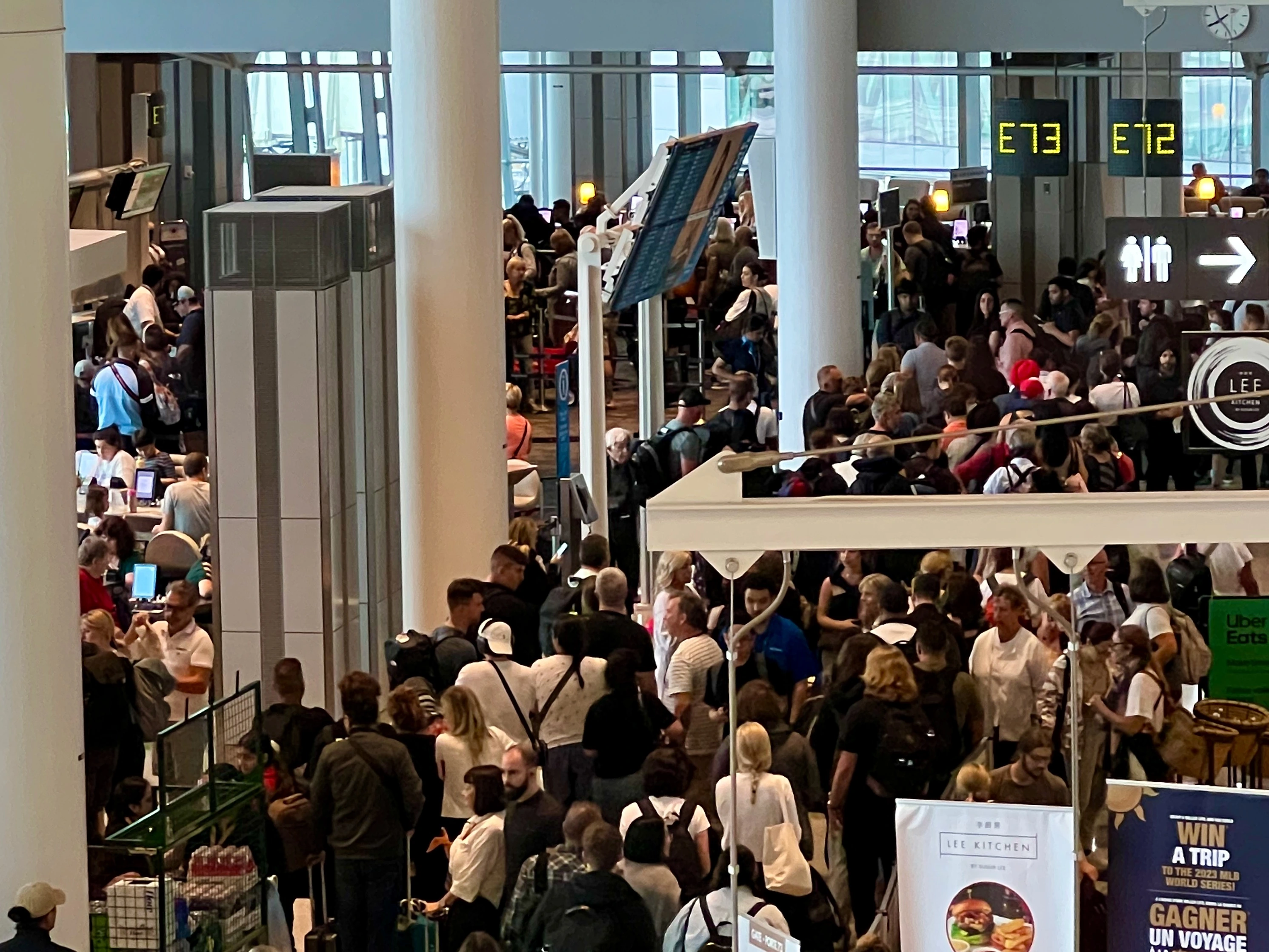
Do your flights into and out of these airports match these findings?
According to the report, these airports represent the most advanced, end-to-end smart airport ecosystems in operation today.
From biometric-enabled passenger journeys and AI-driven air traffic coordination to digital twins and autonomous systems, the airports featured in this year's list are shaping the future of your flying experiences around the world through capacity optimization, passenger satisfaction, and environmental performance.
Images: FRA and YYZ; courtesy of Lynn Elmhirst, travel journalist and expert
All rights reserved. You are welcome to share this material from this page, but it may not be copied, re-published, broadcast, rewritten or redistributed.
by Lynn Elmhirst on 01/22/2026
France’s legendary Côte d’Azur has long been a fabled coastline of sunshine, glamour, and the good life in true French and Mediterranean style. It’s irresistible! And of course, you’re going to want to bring some of it home as gifts or ways to re-live your vacation in one of the original chic holiday destinations.
From pastel fishing villages to seaside promenades, Roman roads to Provencal markets, yacht harbors to turreted castles and maritime forts, the French Riviera landscapes blend sea, sun, herbs, vines and stone.
We cruised in true French Riviera fashion aboard the luxury yacht Scenic Eclipse during the exquisite early summer months, gliding into historic ports alongside private yachts in truly authentic Côte d’Azur style.

Scenic Eclipse in good company among other yachts in port in Monte Carlo

French fashion houses in Saint Tropez
’m a big fan of experiences over ‘stuff,’ so my souvenir list is heavy on things you can use, consume… and share as you break bread with those you cherish, not things that you’ll have to dust!
Ranging in color from green to gold, Riviera olive oil reflects sun-drenched terraces and ancient groves clinging to rocky hills above the sea. Smooth yet peppery, fresh, cold-pressed virgin olive oil captures Mediterranean light, limestone soils, and the essence of Provençal flavor. Olive cultivation here dates back to Roman times, making oil one of the region’s oldest and most essential food traditions. For an extra touch of luxe, splurge on genuine, truffle-infused olive oil!

Lavender is another irrepressible visual of the South of France: pale violet fields rippling in warm summer breezes under Provencal sun. Renowned as a calming scent, lavender has been used for medicine, perfume, cuisine and more. Lavender became a symbol of Provençal life long before visitors made it an essential souvenir of any trip to the region, in the form of dried blooms, oils, drawer sachets and more.

Herbes de Provence are the aromatic harvest of the Riviera’s scrubby hillsides: thyme, rosemary, oregano warmed by its endless sun, amplified by the region’s pale rocks. Originally collected from the wild, they evoke the essential flavors of Provence, and sun-dried herbs enhance mouth-watering cheeses, olive oil, fish, salads and veg. Up your grilling game with some herbes de Provence and become the envy of the neighborhood.

Herb and lavender vendor at the tres chic outdoor market in Saint-Tropez
Hand-harvested fleur de sel mirrors the Riviera’s intimacy with the sea. Delicate crystals form on sun-warmed salt pans, capturing mineral brightness and coastal breezes. Once more valuable than gold in antiquity, sea salt underpinned Mediterranean trade and preservation for centuries.
Sel de Camargue is an even more specialized salt from the marshes of the delta draining from the South of France into the Mediterranean Sea, a unique ecosystem inhabited by pink flamingos and wild black horses. Pink salt flats are kissed by the winds of the “Mistral” and result in a moist and mineral-rich, iconic component of Riviera cooking rooted in seafood and vegetables.

Foie gras and duck terrines reflect the Riviera’s celebratory side—festive tables, long lunches, and aperitifs overlooking the sea. Though originating inland, these dishes became staples of French festive culture, symbolizing hospitality, abundance, and ceremonial meals you’ll want to bring home, safely canned, for your next cocktail party/ charcuterie board for that authentic flavor of France.

Sardines are the iconic dish of humble fishing villages – even now, these destinations have become magnets for travelers seeking a French Riviera lifestyle. Preserved in olive oil, sardines embody coastal thrift, nutrition, and tradition, served simply on fresh bread, sometimes with ripe tomatoes – and always wine! The 19th century brought canning, and soon after, in the French way, decorative and collectible sardine tins or ‘boites’ that often line the walls of simple seaside bars and restaurants.

Of France’s many diverse wine regions, Riviera wines reflect sunlit slopes above the sea, producing fresh rosés, whites, and light reds shaped by maritime breezes and rocky hillsides. Often enjoyed chilled – ideal for an afternoon on the deck of your yacht or at a seaside café, they mirror the region’s relaxed aperitif culture and seafood-forward cuisine.
Don’t forget to bring home the sweet side of the French Riviera! Calissons—rounded diamond-shaped sweets of almond, candied fruit, and icing—are Provence’s answer to almond paste/ marzipan, lightened and scented with summery fruits like melon. Traditionally associated with weddings and religious celebrations, calissons date back to the 15th century. Just one at the end of a meal transports you to the sunny markets of the region.

Marseille-style soap dates to the Middle Ages, when olive oil soaps became regulated and prized across Europe for their purity and delicate scents of local flowers and herbs. Now, as then, they are a refined and indulgent element to add to cleansing rituals and everyday life.

This souvenir is maybe the most personal and the least about sharing – well, maybe you share it by wearing it for that special someone. Perfume from Grasse, in the hills above the Riviera, is the world capital of perfume. With its origins in the 17th century, and still surrounded by fields of rose, jasmine, and orange blossoms used as precious ingredients in some of the world’s most famous and treasured scents, perfume from Grasse remains one of the most special gifts you can give yourself. You can even learn to make your own signature scent!

I even got to meet a perfume rose farmer and help with the harvest!
Photos and Story: Lynn Elmhirst, cruise/ travel expert and journalist.
All rights reserved. You are welcome to share this material from this page, but it may not be copied, re-published, broadcast, rewritten or redistributed.
by Lynn Elmhirst on 01/22/2026
If you love the sounds of sails snapping in the tropical breeze, St. Maarten stands out with two iconic ways to discover your inner sailor: the largest regatta in the Caribbean, and the year-round, hands-on 12-Metre Challenge racing experience even landlubbers can win – and which has been voted the #1 shore excursion in the Caribbean for 15 years!
At just 37 square miles, St. Maarten is the smallest island in the world to be shared by two nations – The French northern part, which is St. Martin, and the Dutch Southern part, which is St. Maarten – creating a destination with European charm and Caribbean flair. 37 beaches mean there’s always water nearby – and it’s one of the sailing capitals of the world.
Sailors and spectators come from around the world to St. Maarten’s annual regatta (pictured below). It’s not only the biggest in the region, but it’s also among the world’s leading warm-water races, with a fleet of international competitors that provide fierce competition. 2026 marks the 46th St. Maarten Heineken Regatta, and takes place March 5 - 8, 2026.
Over 20,000 visitors gather every year on the island. In addition to recreational sailors and live-aboard cruisers, Olympic medalists, world champions, and charter crews from more than 37 countries join the exciting mix.
Racing takes place across multiple classes: Maxis, Performance Multihulls, monohulls, non-spinnaker cruising boats, bareboats, and the relaxed Island Time class. Courses mix windward-leeward and coastal races, giving competitive classes a chance to tackle up to eight races over four days while cruisers enjoy scenic, less demanding routes.

Participation is open to all – in addition to registering a team of their own, enthusiasts can charter a boat to race locally or even join an existing crew.
Is spectating more your speed? Get close to the action aboard the Official Spectator Boat, which even serves breakfast, lunch, and an open bar!
Often described as “Serious Fun,” the regatta is as much about the shared sailing and shore experience as it is about the competition. While the on-water competition delivers fast, exciting sailing by day, the energy continues each evening at the regatta village in Simpson Bay Lagoon. Open to sailors and non-sailors alike, the Village is the heart of the event’s shoreside festivities, featuring live music, prizes, local and international cuisine, and a lively Caribbean atmosphere with regional and international artists.
Even if you miss the island’s once-a-year regatta, and you’ve never been on a sailboat before in your life! You can step – or sail – directly into sailing and sporting history on St. Maarten’s 12-Metre Challenge (pictured, top) any time of the year.
This is not a sailing lesson or a relaxing cruise—it’s an all-hands-on-deck race aboard authentic 12-Metre yachts, the sleek, powerful vessels that once defined the golden era of the America’s Cup racing series.
Participants are divided between 12-Metre yachts and assigned a crew task in a friendly but exhilarating race. Professional skippers and crew handle navigation and safety, while participants get into action—grinding winches, trimming sails, and responding to the captain’s commands as the boats race against each other on a course on St. Maarten’s turquoise Caribbean water.
By the end of the race, no matter whether you’ve crewed the winning or losing America’s Cup yacht in the 12-Metre Challenge, you’ve actually participated in an authentic, thrilling and once-in-a-lifetime yacht race. And you leave St. Maarten with hard-to-beat bragging rights. You can tell all your friends, “I raced an America’s Cup yacht.”
Top image: Lynn Elmhirst, cruise/ travel journalist and expert.
Second image as credited.
All rights reserved. You are welcome to share this material from this page, but it may not be copied, re-published, broadcast, rewritten or redistributed.
by Lynn Elmhirst on 01/22/2026
 Shawna Schrank
Sign up for our newsletter to learn about the latest product news and deals. Also receive exclusive offers, contest details and giveaways.